Autopsy Reveals What Caused Deaths Of Nairobi’s Street Families
An autopsy on the remains of street families found dead in various locations throughout Nairobi confirmed that pneumonia was the cause of death.
According to officials, the postmortem also found that several of the victims had suffered from malnutrition and other injuries.
Some children were slain in mob justice situations after being accused of, say, stealing.
Police said they retrieved some of the dead from alleys and streets during the last month and transported them to the mortuary.
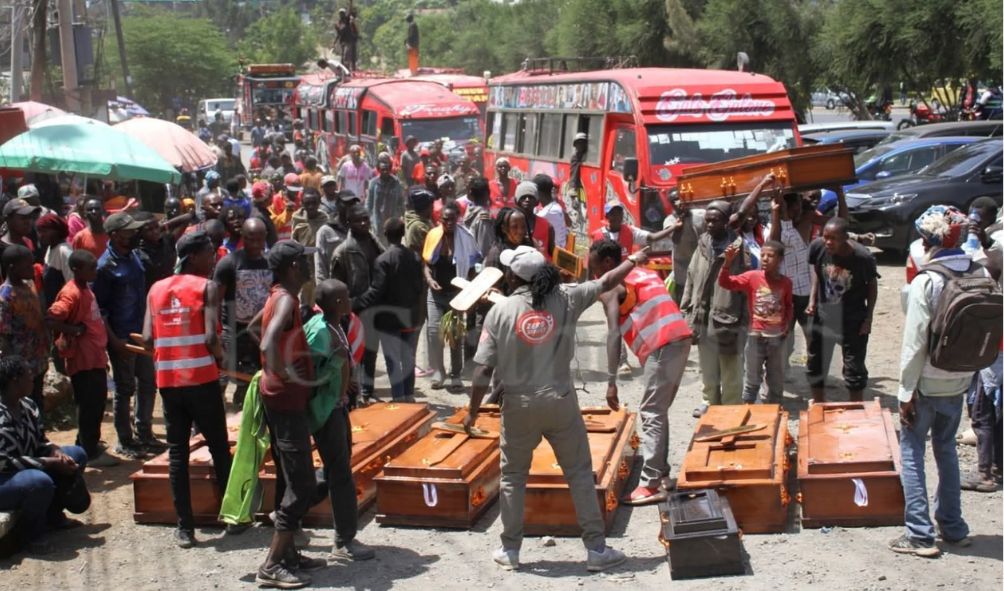
On Thursday, ten of the bodies were laid to rest at the Langata Cemetery in an emotional ceremony.
Pathologists determined that the majority of the bodies had lung illnesses associated with pneumonia. This caused the deaths.
Concerns were raised over the deaths of approximately 15 street families in the city in the last month alone.
The autopsy revealed that one of them died by drowning.
The postmortem was performed at the City Mortuary on Thursday before the remains were interred.
In less than two weeks, the Nairobi Street family has lost at least 15 of its members. That's an average of one member a day. 9 of them were buried yesterday at the Lang'ata cemeteries. The rest will be interred next week after the autopsies to determine their causes of death… pic.twitter.com/BOq1a9YIbf
— George T. Diano (@georgediano) January 30, 2026
The other street families attended the celebration.
The air at Langata Cemetery was heavy with grief and unanswered questions as Nairobi bid a tearful farewell to ten of its street children, whose young lives were cut short by the city’s cruel indifference.
In heartbreaking circumstances, fellow street families served as pallbearers.
They carried little coffins, some of which contained the bodies of newborns as young as three months.
The burial, coordinated by philanthropist Agnes Kagure, was a rare moment of dignity for a community that lives and dies in the shadows.
Hunger, illness, neglect and unexplained deaths are daily realities for Nairobi street families. Addressing these challenges requires presence, organization, and sustained effort. Charity by well-wishers like myself alone cannot solve such systemic problems, but can remind us of… pic.twitter.com/oURfqiTMoi
— Agnes Kagure (@itsagneskagure) January 29, 2026
I believe no one should be abandoned in death simply because they were neglected in life. That is why we stepped in to offer dignified send-offs to street families whose bodies had been piling up in our morgues; forgotten, unseen, and unheard.
— Agnes Kagure (@itsagneskagure) January 30, 2026
However, we must remember that… pic.twitter.com/z9Sqtl9Sn8
The most disturbing aspect of this tragedy is the silence surrounding the deaths.
The bodies were collected from various city mortuaries, including City Mortuary and Mama Lucy Hospital.
Causes of death remain vague—pneumonia, malnutrition and mob justice—euphemisms for the brutal reality of street life.
There were no government officials present, no speeches from the Children’s Department.
ALSO READ:
- “I Will Expose Individuals Stealing Public Funds!” – Presidential Hopeful Eliud Owalo
- Kenya Met Forced To Clarify Nairobi’s Hot Weather Amid Heat Wave Concerns
- Gov’t Goes After Fake Pest Control Products, Arrests 25 Individuals
- Ruto, CSs Make Fresh Appointments to State Boards And Committees
- REVEALED: New Ways Scammers Are Using To Swindle Kenyans Online
The sight of a tiny coffin for a three-month-old baby brought the gathering to its knees.
Born on the pavement, died on the pavement. Kagure called for a systemic overhaul of how Nairobi handles its vulnerable children.
The burial highlights the exploding crisis of homelessness in Nairobi, exacerbated by the demolitions in informal settlements.
Street families in Kenya, numbering over 46,000 as of 2018, with significant populations in Nairobi, Mombasa, and Kisumu, face severe challenges including violence, malnutrition, and exposure to harsh weather.
Autopsy Reveals What Caused Deaths Of Nairobi’s Street Families