Kenya Defends Its Stand On Tanzania’s Political Tensions
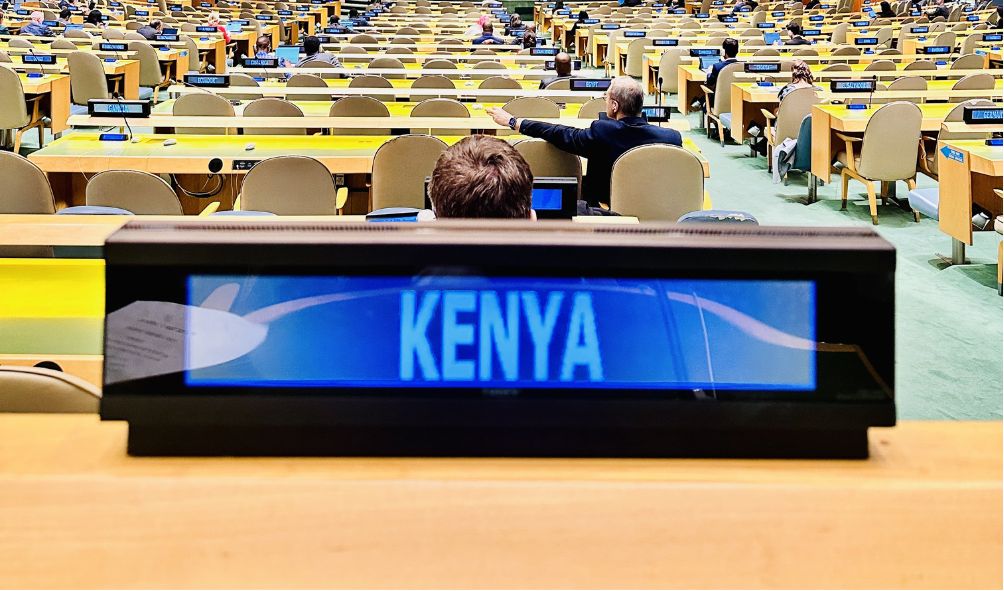
Foreign Affairs Principal Secretary Korir Sing’oei stated that Kenya is concerned about developments in Tanzania following the recent elections, adding that “context and process matter” when assessing how best to assist a neighboring state in crisis.
“Desirable but third-party involvement is not everyone’s cup of tea,” Dr Sing’oei said.
The PS was reacting to former Kenyan Permanent Representative to the United Nations, Ambassador Martin Kimani.
In a post on X, Kimani encouraged Nairobi to take the lead in assisting Tanzania in navigating post-election turmoil.
He had maintained that Kenya owes Tanzania a debt of reciprocity, citing the fact that during Kenya’s 2007-08 post-election crisis, then-Tanzanian President Jakaya Kikwete, who was also AU Chair, played a significant role in mobilising regional leaders to assist in brokering peace.
Tanzania, in collaboration with Ghana’s President John Kufuor and the Panel of Eminent African Personalities led by Kofi Annan, assisted in the creation of Kenya’s Grand Coalition Government through the National Accord.
Desirable but third party involvement not everyone’s cup of tea. Context important. https://t.co/yDi5XvMUQh
— Korir Sing'Oei (@SingoeiAKorir) November 12, 2025
“Kenya cannot now let Tanzania sink,” Kimani wrote, urging the government to dispatch representatives from government, opposition, and civil society to help mediate.
He highlighted that Kenya’s approach should adhere to the principle of subsidiarity, with the East African Community (EAC) taking the lead.
He also suggests that the EAC collaborate with the Southern African Development Community (SADC) and only engage the African Union (AU) as needed to maintain a single, consistent mediation track and avoid competing approaches.
Kimani emphasized that citizens’ safety must come first, reminding leaders that the EAC Treaty defines the region as one of peace, good neighbourliness, and respect for human and people’s rights.
“Let’s be neighbours who help put out the fires and resolve crises,” he said.
As a founding member of the EAC, he believes Kenya must display a stronger sense of purpose, one that upholds Mwalimu Julius Nyerere’s goal.
Nyerere believed so strongly in East African unity that he delayed Tanzania’s independence to await Kenya’s, all in the name of regional solidarity.
Samia Suluhu was declared the winner of the general election on October 29, 2025, with almost 97% of the vote after her primary competitors were banned from the ballot.
The African Union (AU) later stated that the election “did not comply with AU principles, normative frameworks, and other international obligations and standards for democratic elections.”
ALSO READ:
- Niger Withdraws From International Criminal Court, Labels It Neocolonialist
- DPP Approves 16 Murder Charges Against NINE Utumishi Girls Students
- Satellite Images Contradict Duale’s Claims On Ebola Facility Construction
- Quarantine Scare Forced Ruto To Cancel Congo Trip – CS Duale
- CS Ruku Issues Directive To State Agencies On Citizen Services At Huduma Centres
Large-scale protests broke out on election day and quickly afterwards, notably in towns like Dar es Salaam.
This was triggered by the exclusion of opposition candidates and alleged electoral irregularities. Security forces used tear-gas and live rounds in some instances.
The government has charged dozens of individuals with treason and criminal conspiracy in connection with protests linked to the election.
Reports from opposition figures claim hundreds (some say up to 700 or more) were killed in the protests, but the government disputes these numbers.
Kenya Defends Its Stand On Tanzania’s Political Tensions