‘This Is The Plan!” – Ruto Defends Ksh5 Trillion Infrastructure, Breaks It Down
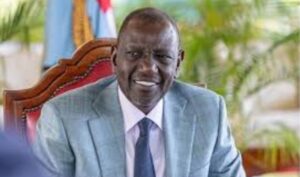
On Friday, President William Ruto defended his administration’s multitrillion-shilling infrastructure project.
He reiterated that the proposal is feasible and will be implemented quickly through private-public partnerships, rather than borrowing or new taxes.
Speaking about the Sh5 trillion funding framework for infrastructure development, he stated that it is possible through “new thinking” that utilizes existing assets, financial markets, and privatization.
“It is the mindset of small thinking that looks at this plan as unrealistic. I intend that by next year we should raise the first two and a half trillion,” he said.
“I am not talking about five years. I am talking about next year.”
For years, fellow citizens have spent countless hours trapped in relentless traffic along the Western Corridor, especially on the 175km Nairobi-Mau Summit road section and the 58km Nairobi-Maai Mahiu-Naivasha stretch that winds through the treacherous Kikuyu Escarpment.
— William Samoei Ruto, PhD (@WilliamsRuto) November 28, 2025
Beyond… pic.twitter.com/g9vPhYB0jm
According to the President, Kenya can raise funds by utilizing innovative financial structures, unleashing the value of public assets, and tapping into both domestic and foreign markets.
“That is the kind of ambition that is going to move us from where we are to where we should be,” Ruto said.
During the launch of a major highway project, Ruto stated that the route represents a historic shift in how Kenya funds huge infrastructure.
He identified it as the first major highway developed entirely under a public-private partnership paradigm.
He emphasized that the project did not rely on loans, higher taxes, or reallocating cash from other projects.
“What we are doing today is very significant because it is the first major highway we are building in Kenya using a private-public partnership,” he said.
“We are not borrowing money to build it, we are not taxing Kenyans, and we are not delaying other projects.”
Ruto’s words came during the launch of the Nairobi-Nakuru-Mau Summit and Nairobi-Maai Mahiu-Naivasha public-private partnership road projects.
The President declared that his administration intends to build nearly 2,500 kilometres of highway around the country, with additional projects to be advertised in January and February.
He identified Kiambu Road and the Northern Bypass as priority corridors for procurement next year.
Ruto denied that the strategy is unduly ambitious or long-term, noting that execution has already begun.
“When I communicated the plan in Parliament, many people thought it was something for many years from now. No. This is a plan we are implementing from now,” he said.
He added that Kenya could transition into a first-world economy within 30 years if the strategy is fully executed.
“In my estimation, we should be able to move Kenya to a first-world economy in 30 years. If I get to 90, I should be able to see Kenya as first-world before I move on,” he said.
During the State of the Nation Address in Parliament, Ruto stated that his administration will emphasize four pillars to make the plan a reality.
These include investing in people, reforming the economy, producing more energy, and transforming the transportation and logistics industry.
He stated that they are aiming to invest in their people through education, skill development, scientific training, and innovative capabilities.
Regarding economic transformation, Ruto reaffirmed that the government must transition from a net importer to a net exporter of products, goods, and services in order to save Sh500 billion per year on agricultural items.
President Ruto: Many people think this plan is about the next election, or that it will start in 2028. I want to tell you that this plan starts today, with this road. This isn’t about the next election, it’s about the next generation. In the next 30 years, I want Kenya to become… pic.twitter.com/HkjQQzXmvW
— KBC Channel 1 News (@KBCChannel1) November 28, 2025
“We have already made interventions to reduce imports of maize, sugar, edible oil, rice and wheat, but our efforts are undermined by the natural limits of rain-fed agriculture,” he said.
The third pillar, creating additional energy, remains vital to Ruto’s efforts to transform the country.
He remarked that Kenya barely generates 2,300 MW, compared to a target of 10,000 MW.
He explained that this target would be key in modernising the economy by leveraging technology to transform key sectors.
The final pillar involved enhancing the transport sector by maintaining world-class seaports, airports, highways and digital corridors.
ALSO READ:
- Governor Rejects Inflated Ksh17.8B Budget, Blasts County Assembly Over Neglecting Crucial Fund
- Kenya Railways Steps In For Stranded Aviation Passengers With Special Train Services
- UDA’s Gathoni Wamuchomba Threatens To Quit Party Over Ruto’s Selective Justice
- Aviation Workers’ Strike Paralyses Airports Activities, Gov’t Given Ultimatum
- Sifuna Lights Up Meru, Pledges To Make Realistic Promises & Adhere To Constitutionalism
“Efficient transport and logistics are the backbone of our competitiveness,” the president said.
“They accelerate national development, connect products to markets, move goods and services, lower the cost of doing business, and will reinforce Kenya as the aviation and commercial capital of East and Central Africa.”
As we invest in transformative mega projects such as the Rironi-Mau Summit highway, we remain equally committed to improving feeder roads across the country.
— William Samoei Ruto, PhD (@WilliamsRuto) November 28, 2025
These roads provide vital linkages between towns and villages, producers and consumers, strengthening connectivity and… pic.twitter.com/jMLVNpsuAw
Ruto has continued to cite the successes of several Asian economies, including Singapore, South Korea, Japan and Malaysia.
He insisted that they are examples Kenya can emulate through disciplined policy implementation, industrial growth, and improved productivity.
‘This Is The Plan!” – Ruto Defends Ksh5 Trillion Infrastructure, Breaks It Down