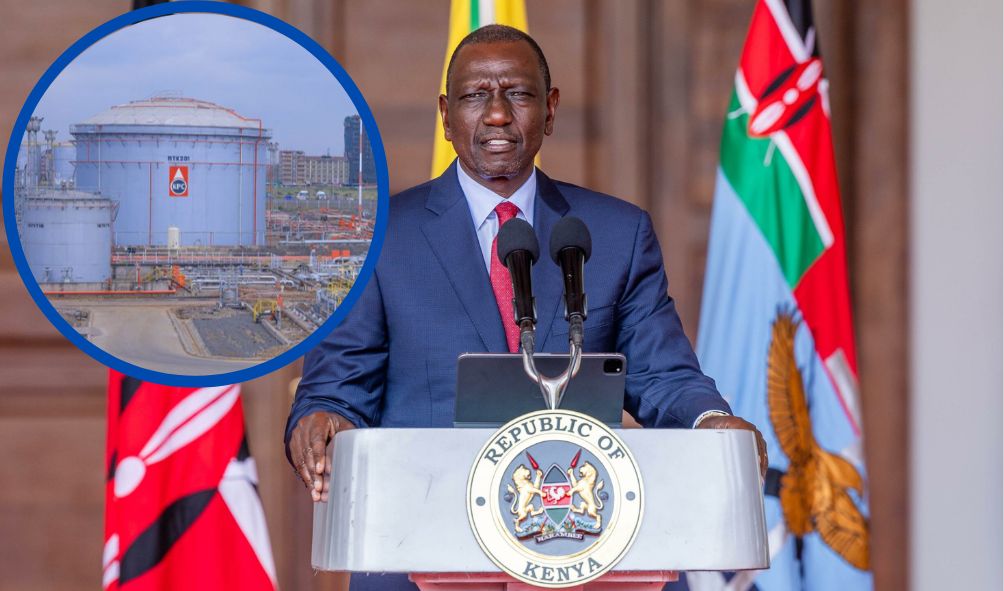
HANDS OFF KPC: Kenyans Blast Ruto’s Cabinet Over Privatization Decision
President William Ruto is under criticism over the planned sale of the Kenya Pipeline Company (KPC), which will see the company’s shares listed on the Nairobi Securities Exchange (NSE).
Just one day after the cabinet approved the company’s privatisation, the Motorists Association of Kenya (MAK) expressed its disapproval.
They highlighted that the move not only harmed public trust but also jeopardized Kenya’s most valuable national asset.
In a statement issued on Wednesday, July 30, MAK pointed out various problems in the sale of KPC, which they described as the Republic of Kenya’s single most valuable public asset.
Kenya Pipeline Corporation KPC is a state corporation with the critical mandate of transporting, storing, and distributing petroleum products through an expansive network of pipelines and oil depots. These facilities include major storage and delivery hubs. pic.twitter.com/kw9LJX3j0V
— Motorist Association (@motoristsoffice) July 30, 2025
“The Motorists Association of Kenya (MAK) registers its strongest opposition to the decision announced yesterday by the Cabinet to privatise the Kenya Pipeline Corporation (KPC), a move that not only undermines public trust but also threatens Kenya’s most vital national asset,” MAK stated.
They noted a lack of parliamentary debate, public participation, and stakeholder engagement, alleging a breach of the Constitution.
They further claimed that there was a secret objective behind the move, with the shares ending up in the hands of a select few.
“The cabinet’s unilateral move to privatise KPC by floating shares to NSE without Parliamentary debate, public consultation, or stakeholder engagement is fundamentally flawed, undemocratic, and contrary to the principles of transparency and public participation enshrined in our Constitution,” MAK noted.
“We know who will buy those shares. It’s not the owners but profiteering privateers, foreigners, and well-connected locals.”
While emphasizing the consumer role of motorists in using KPC’s fuel and oil products, MAK claimed that every decision affecting the company required the full participation of motorists and Kenyans as a whole.
”Motorists – comprising vehicle owners, operators, and drivers—are the consumers of over 99 per cent of KPC’s transported fuel and oil products,” MAK asserted.
“This makes them not only stakeholders but also natural stakeholders of the Corporation.”
He added: “Any decisions affecting the governance, ownership, or operations of KPC must include robust consultation with the motorists who fuel the economy, literally and figuratively.”
Kenya Pipeline Company, built with taxpayers' money, owns very valuable assets; it has long been a cash cow for those in power, CORRUPTION; privatisation is opaque and intended to hand over ownership to the same cartels to continue minting money into their pockets!
— Paul Muite SC (@Paul_Muite) July 30, 2025
The sale of strategic state corporations like Kenya Pipeline Company (KPC) without parliamentary approval is unconstitutional, illegitimate, and void of public mandate.
— Willis Evans Otieno (@otienowill) July 30, 2025
Article 201(a) of the Constitution requires that all public finance decisions be made in accordance with the… pic.twitter.com/0dlzf45SI8
To that end, the Association sought a complete explanation, as well as a public apology, for the sale of the Kenya Pipeline, and urged Kenyans to reject the privatisation drive.
Nonetheless, the Cabinet’s decision comes after a privatisation process that President William Ruto’s government has insisted is vital to minimize the state’s budgetary commitment to firms.
ALSO READ:
- Kenya’s David Munyua Heads Back To PDC World Darts Championship
- A Man Dies In Police Custody, Family Says Victim Had Mental Illness
- DP Kindiki Makes A Ksh39 Billion Projects’ Pledge To Meru, Slams Local Leaders
- FKF Issues Way Forward On Kenya Premier League’s New Season
- Court Rules On 8 Utumishi Girls Fire Suspects, Explains Reasons Behind
According to the dispatch, privatizing KPC will allow “the private sector and industry experts to drive growth, efficiency, and innovation.”
To underline the importance of privatisation, the cabinet referenced earlier examples, such as KenGen’s partial privatisation, which converted the company into a highly lucrative enterprise that grew regionally.
In effect, some of the government’s shares in KPC were to be sold to private investors, and the company would be listed on the NSE, where Kenyans could buy shares and become part-owners of the profitable company.
Besides KPC, the Kenya Literature Bureau (KLB), Rivatex East Africa, the National Oil Corporation (NOC), and the New Kenya Cooperative Creameries (NKCC) are other entities set to undergo privatisation soon.
HANDS OFF KPC: Kenyans Blast Ruto’s Cabinet Over Privatization Decision