EXPLAINER: Why Ksh2.2 Trillion Lamu Oil Petrochemical Complex Is More Than A Refinery
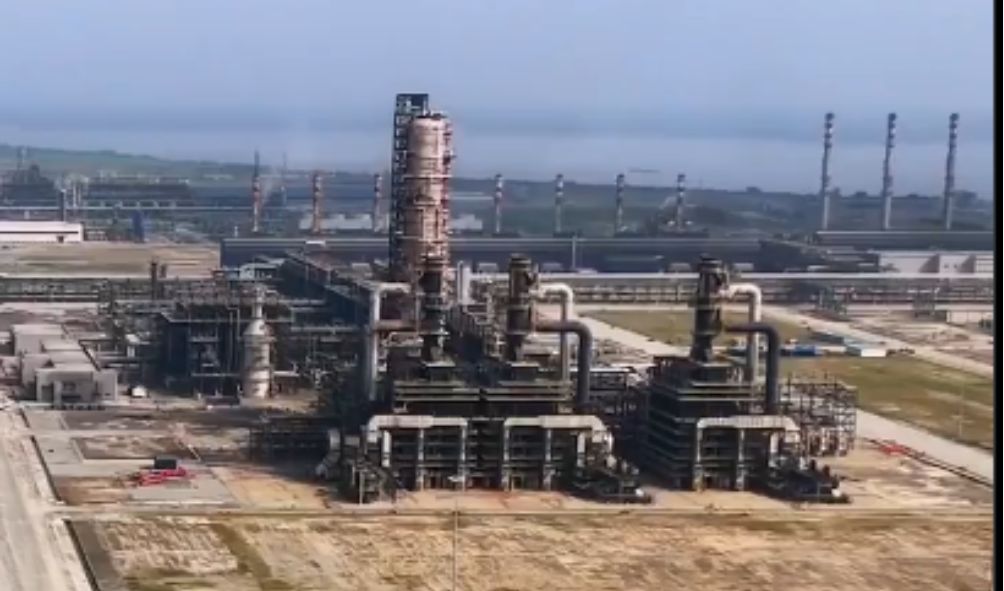
Economist David Ndii has disclosed that the projected Ksh2.2 trillion East African oil refinery in Lamu would be developed as a larger petrochemical complex encompassing sectors other than oil processing.
According to Ndii, the petrochemical complex will boost value addition by at least 50% compared to a solo refinery.
“We are building a petrochemical complex, not just a refinery, which will add value by at least 50 per cent,” he wrote in a comment.
A refinery primarily generates diesel, gasoline, fuel oil, and other petroleum products.
Not by much. Crude oil and petroleum products are globally priced. This is a catalytic industrial development project, leveraging our $20b petroleum product market to add value to East African crude oil, create jobs and infrastructure development https://t.co/8XW2pKIy3g— David Ndii (@DavidNdii) July 10, 2026
A petrochemical plant, on the other hand, turns oil and natural gas byproducts into chemicals that are used in a variety of industries.
The proposed Lamu complex would consequently contain facilities that manufacture raw materials for businesses such as plastics production, packaging, construction, and consumer goods.
These facilities could produce materials such as polyethene (PE), polyvinyl chloride (PVC) and polystyrene (PS), which are used to make items including plastic containers, pipes, household products and industrial packaging.
Other chemical products, such as resins, polymers and solvents, would support manufacturers that rely on these materials to produce finished goods.
Further, a petrochemical complex could also support agriculture through the production of by-products used to make fertilisers and farming-related chemicals.
Industries producing paints, detergents, cosmetics, synthetic fibres and other consumer products could also utilise outputs such as methanol and chemical intermediates.
ALSO READ:
- How Billionaire BidCo Owner Lost Over Kshs100M To Forex Scam By Close Friend
- MILESTONE: Nairobi Beats London, Rome & Munich to Host 2029 World Athletics Championships
- Uhuru Kenyatta Breaks Silence On Jubilee Leadership After Court Orders For His Removal
- Governor Proposes Law To Ban Petrol Motorbikes In Cities To Address Air Pollution
- EPRA Announces Fuel Prices For September-October Cycle
Beyond processing, the plant would create opportunities for businesses involved in storage, transportation, distribution and manufacturing.
With businesses forming part of the wider industrial ecosystem around the refinery, the project is also expected to increase employment and support related economic activities.
Ndii said the planned facility is expected to increase Lamu County’s Gross Domestic Product (GDP) by about Ksh322.9 billion ($2.5 billion), placing it among counties with the highest GDP contributions.
The economist explained that the projected boost would be equivalent to roughly 25 per cent of Kenya’s current manufacturing GDP, estimated at about Ksh1.29 trillion ($10 billion), although he noted the figure could be an underestimate.
The latest details on the project emerge after President William Ruto confirmed that preparations for the project’s launch are at an advanced stage, with a groundbreaking date already set.
EXPLAINER: Why Ksh2.2 Trillion Lamu Oil Petrochemical Complex Is More Than A Refinery