REPORT: How Drought Killed 71,000 People in Somalia Since 2022
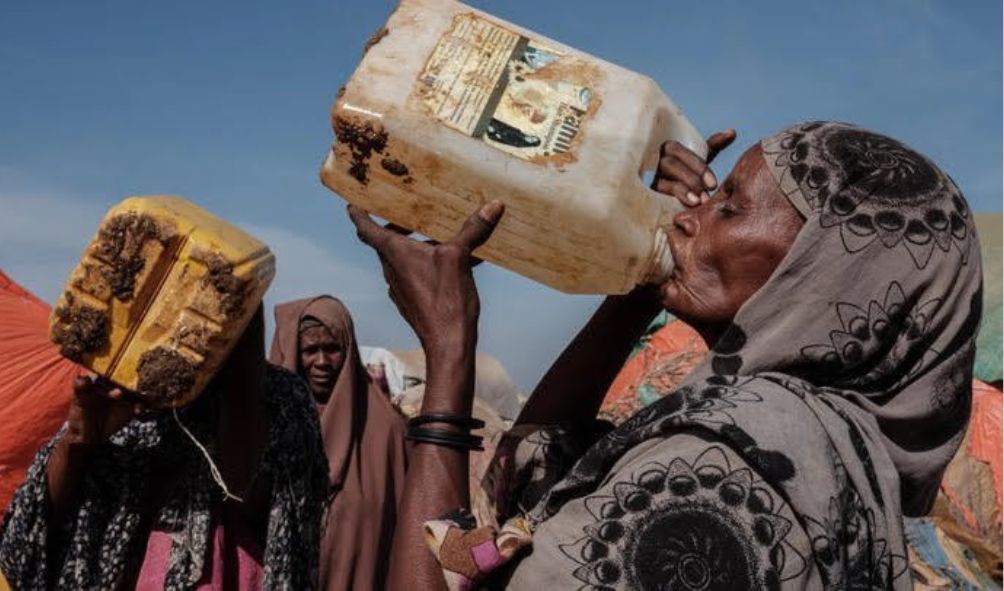
According to research, the catastrophic drought that has plagued portions of Somalia since 2022 has killed at least 71,000 people, far more than projected.
According to the report, which was commissioned by the United Nations Children’s Fund, the World Health Organization, and Somalia’s Ministry of Health, children under the age of five made up around 40% of those killed.
The trial ran from January 2022 to June 2024.
🚨 A study released today by @DrAliHajiadam shows that 71,000 people may have died in #Somalia because of the drought, nearly half of them children. The study was commissioned by @WHOSom and #UNICEF and undertaken by @LSHTM and @SIMADUniversity.
— UNICEF Somalia (@unicefsomalia) January 21, 2025
Read more: https://t.co/MII8vhAoN6 pic.twitter.com/57cEQcitix
In an interview with VOA Somali, Dr. Najib Isse Dirie, deputy director for research at Mogadishu’s SIMAD University, stated that the excess deaths were caused by five failed rainy seasons, which brought regions of Somalia to the brink of famine.
“During the drought and after, the people experienced a significant ‘drought-related excess’ in different cases,” he said.
“Living in overcrowding IDP camps, loss of their livelihoods, and the lack of rainfall severely impacted their crop yields and made them vulnerable.”
Dr. Renee van De Weerdt Renhilde, WHO’s representative in Somalia, stated during the report’s introduction in Mogadishu on Wednesday that the study serves as an unpleasant reminder.
“The findings of this study highlight the profound impact that the 2022–2024 drought has had on the lives of the Somali people …,” she said.
“This is a stark reminder of the urgent need for continued support and resilience-building efforts in Somalia.”
“This also underlines the critical importance of strengthening Somalia’s health emergency prevention, preparedness, readiness and resilience system to effectively respond to emergencies and provide sustained care for people in need,” she added.
“WHO continues to collaborate with the Somali government and partners to ensure that communities are not only protected during crises but also empowered to withstand and recover from future shocks.”
The humanitarian crisis in #Somalia remains alarming despite some improvements in 2024.
— OCHA Somalia (@OCHASom) January 23, 2025
On 22 Jan, the Federal Gov’t & humanitarian community launched the 202 Humanitarian Needs and Response Plan.
Here is an overview. pic.twitter.com/HpIHA7P4FJ
At the occasion, Somali Health Minister Dr. Ali Hadji Adam Abubakar explained his country’s efforts to mitigate the effects of future droughts by prioritizing vulnerable children and women.
“For my ministry, our focus is on creating a strong and robust health system as the cornerstone of a healthy and thriving Somali society,” Abubakar said.
As it launched an appeal this week to gather Ksh.185 billion, the United Nations warned that almost 6 million people in Somalia may require humanitarian assistance this year.
ALSO READ:
- KPLC Issues Statement On Mbeere North’s Missing Transformers After Ol Kalou Links
- OFFICIAL: Senator Edwin Sifuna Removed As ODM Secretary-General – ORPP
- DCI Claims Deceased KFS Official ‘Struggled With Depression’, Disappeared From Home
- “We Will Cancel It Altogether!” – IEBC Warns On Ol Kalou By-Elections Over Bribery Concerns
- KUCCPS Issues New Directive To Students On University Placement Messages
In a statement, the United Nations Office for the Coordination of Humanitarian Affairs stated, “Somalia continues to face a complex, protracted humanitarian crisis.”
They also stated that conflict, insecurity, disease outbreaks, and recurring shocks from natural disasters such as droughts and floods exacerbate Somalia’s humanitarian needs.
Recurrent climate shocks such as droughts & floods are shattering the livelihoods of millions in #Somalia. @WFP is working with government and partners to meet the emergency needs of vulnerable people & implementing long-term solutions to build communities resilience to crises. pic.twitter.com/yN3ihUGsa6
— WFP Africa (@WFP_Africa) January 19, 2025
In 2011, a famine in Somalia killed almost a quarter of a million people.
UNICEF and WHO commissioned the study, which was conducted out by the London School of Hygiene and Tropical Medicine, Imperial College London, and Somalia’s SIMAD University.
REPORT: How Drought Killed 71,000 People in Somalia Since 2022