Ruto’s Compensation Panel Defends Proposal For Protest Victims
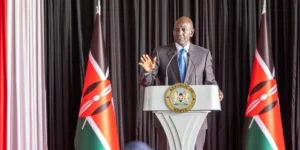
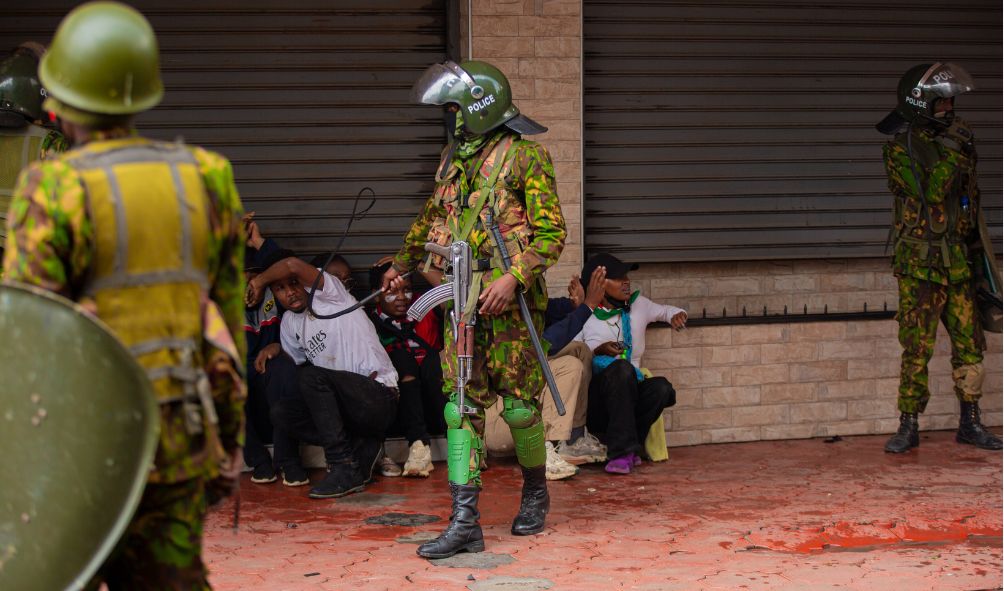
President William Ruto’s 18-person panel on compensation for victims of police brutality and protest-related injuries has defended its formation in court.
They have described it as a lawful, humanitarian, and long-overdue move to provide justice to Kenyans left behind by the system.
In its submissions, the panel led by Professor Makau Mutua claims that for decades, victims of public unrest have had no effective way to remedy, forcing them to pursue costly, drawn-out lawsuits that few could afford.
“The President acted within the law and in good faith to respond to the cries of thousands who have suffered in silence,” the court papers read.
The experts insist that the panel’s role is entirely consultative, collecting and verifying data from actual victims, collaborating with institutions such as KNCHR, IPOA, the National Police Service, and the Ministry of Health, and recommending reforms within 120 days.
“The panel does not pay or prosecute anyone. It only makes recommendations that will later be reviewed by the Treasury, Parliament, and other oversight bodies,” they said.
According to the panel, the effort arose from repeated requests from the church, civil society, and the opposition for the government to assist victims of protest violence.
They compared the effort to previous compensation schemes for 2007/2008 post-election violence victims and internally displaced persons.
However, they added that this time, controls had been put in place to prevent bogus beneficiaries and ghost records.
According to the experts, the President acted within the scope of his constitutional mandate under Articles 131 and 132, which grant him the authority to coordinate administrative tasks and establish advisory committees.
“Creating taskforces or panels to gather facts and propose policy solutions is normal executive work — not an attempt to take over judicial or parliamentary powers,” they said.
They also stated that other countries, like South Africa, Nigeria, and the United States, had employed similar systems to pay victims of mass violence, demonstrating the legality of such programs.
Petitioners opposing the proposal argue that it duplicates the functions of institutions such as the Kenya National Commission on Human Rights (KNCHR) and may result in financial mismanagement or privacy violations.
Hapo awali, Claris Awour Ogangah-Onyango: when I get to be chair, I will ensure that I stamp my authority so that no one encroaches on the mandate of the Commission.
— Nelson Havi Ndung’u (@NelsonHavi) November 11, 2025
Punde si punde, Claris Awour Ogangah-Onyango is hereby appointed Vice-Chairperson of the Panel of Experts on… pic.twitter.com/EckEEznNs8
However, the government has dismissed those concerns, stating that the procedure is directed by the Public Finance Management Act and the Data Protection Act, which ensure that every stage is public and auditable.
ALSO READ:
- Education Ministry Orders University Fund, HELB Application Extension After Public Outcry
- NAKURU: Students Riot, Torch School Facilities As Police Forced To Intervene With Teargas
- Ruto Orders Multinational Company Out Of Kenya, Accuses Them Of Stifling Resources
- Ruto CS Behind Notorious Unit Linked To Abduction Of Standard Media Editor
- IG Kanja Finally Speaks On Police Involvement In Abduction Of Standard Media’s Journalist
They warned that halting the panel’s work would punish victims who had waited years for justice.
“This process is not about politics. It’s about compassion, fairness, and healing for families who have suffered during protests,” the state said.
“The process is legal, time-bound, and accountable,” reads the submissions
Ruto’s Compensation Panel Defends Proposal For Protest Victims