CS Wandayi In Hot Soup As Investigations Reveal HUGE Gap On Substandard Fuel Account
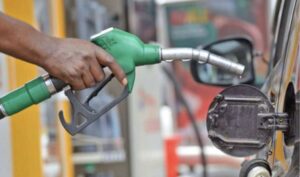
There was a 10-day gap between the arrival of the now-controversial fuel at the Port of Mombasa and the government’s orders for the removal of the fuel shipment deemed to be substandard, the government now reveals.
During this period, some of the fuel may have made its way to petrol stations, the documents show.
An investigative report by KTN News indicates that the 60,000 metric tonne product entered Kenya and was distributed to different oil marketers 10 days before Energy Cabinet Secretary Opiyo Wandayi ordered the company that facilitated the import to remove the product from the country.
According to the report, the shipment arrived at the Port of Mombasa on March 27. It was received by the company linked to a Kenyan tycoon, which then reportedly transferred portions of the consignment to other oil marketing companies shortly after clearance.
The MT Paloma vessel docked in Mombasa carrying a fuel consignment now valued at Sh11.8B at the centre of allegations involving inflated costs, questionable fuel quality, and irregular market entry.
— Stephen Mutoro (@smutoro) April 23, 2026
🔴 The Withdrawal Order That Wasn’t
✅Energy CS Opiyo Wandayi ordered the MT… pic.twitter.com/cH5x2hfVbs
Documents reveal that the transfer of the said product to oil marketers started on April 28, the same day Trade Cabinet Secretary Lee Kinyanjui wrote to his Energy counterpart Opiyo Wandayi, granting the authorisation for handling and offloading of the cargo.
This contradicts Kinyanjui’s earlier statement, where he claimed that by the time the two ministries were exchanging letters, the shipment had not yet been received.
“At the time these letters were being exchanged, we had not received the cargo,” Kinyajui stated during an interview with Citizen TV on April 16.
But when asked about whether the cargo had the set standard of fuel, Kinyanjui noted that it stood solely with the Kenya Bureau of Standards (KEBS).
“The standard is set by KEBS, and the law allows the institution to give a waiver as long as the conditions of the waiver are within national interests. A technical committee goes through this and gives an evaluation, which was done,” he added.
It is worth noting that the letters in question were exchanged on March 28, a day after the cargo docked at the Port of Mombasa and offloading had already begun.
According to the documents, oil distributors were billed for the fuel on the same day the approval was granted, and at that point, the fuel had already entered the fuel distribution machinery.
This system normally operates in two ways, either the distributors use Kenya Pipeline Company’s storage facilities for collection at various depots around the country or take the oil to their storage facilities.
It would be 10 days before CS Wandayi ordered the consignment of Ksh8 billion to be removed from the Kenyan market.
ALSO READ:
- KFS Responds To Alleged Muthaiga Golf Partial Annexation In A 21.8ha Karura Forest Land Dispute
- How Billionaire BidCo Owner Lost Over Kshs100M To Forex Scam By Close Friend
- MILESTONE: Nairobi Beats London, Rome & Munich to Host 2029 World Athletics Championships
- Uhuru Kenyatta Breaks Silence On Jubilee Leadership After Court Orders For His Removal
- Governor Proposes Law To Ban Petrol Motorbikes In Cities To Address Air Pollution
This cites irregularities in procurement and compliance with the government-to-government (G-to-G) fuel import framework. This was on April 7 at the height of the controversy.
Wandayi further directed that oil marketing companies should not uplift or pay for the fuel and instructed that all invoices be cancelled and credit notes issued.
I said this when the fuel scandal started, and people here didn’t agree with me.
— Sholla Ard 🇰🇪 (@sholard_mancity) April 23, 2026
Those arrests didn’t look like justice.
They looked like a fight over profits.
And what was happening was pure PR
Now look at this timeline I have compiled by KTN and others
27 Mar – MT Paloma… pic.twitter.com/gtjZH55Vvo
However, his directive was given when parts of the fuel had already been distributed, and paper billing arrangements were made, potentially penetrating into the market.
This raises questions about the quality of fuel that is currently in Kenyan pumps, with fears that it might be substandard fuel in circulation.
Kenya is on the hook for Ksh3.53 billion for the controversial fuel shipment, which is said to have cost a total of Ksh8 billion.
CS Wandayi In Hot Soup As Investigations Reveal HUGE Gap On Substandard Fuel Account