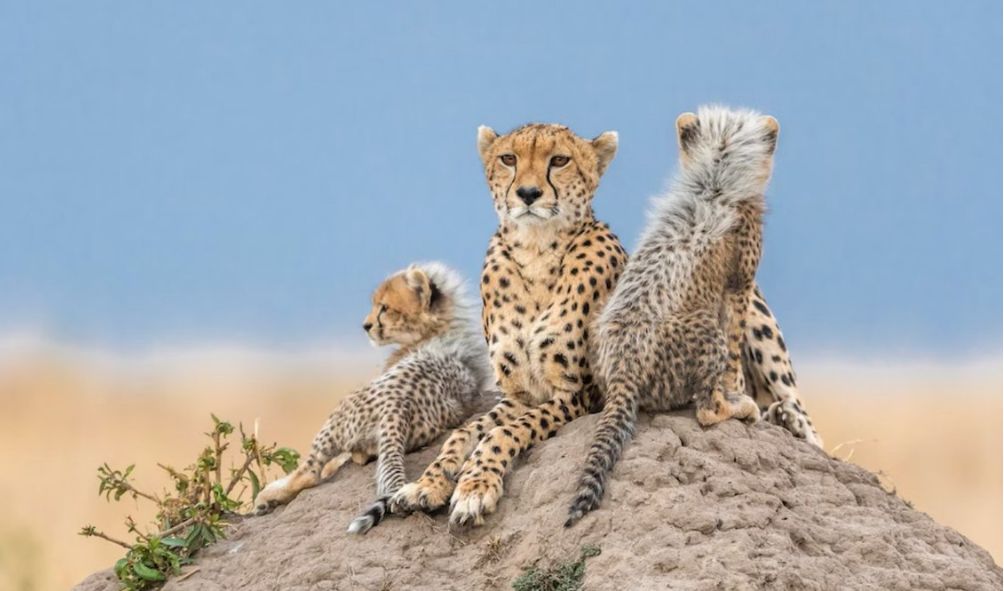
Kenya To Move FOUR Cheetahs To India After Long Delays
India is scheduled to get four cheetahs from Kenya later this year as part of an ongoing animal transfer and conservation program.
According to a May 21 story by The Times of India, the National Tiger Conservation Authority (NTCA) approved the translocation following a March visit to Gujarat’s Banni grasslands.
Kuno in Madhya Pradesh was originally chosen for the Government of India’s Asiatic Lion Reintroduction Project. But Gujarat opposed relocating lions outside the State and, despite a Supreme Court order, successfully stalled the project to retain its monopoly over India’s lion… pic.twitter.com/jlBTOAVYAJ— Siddegowda Shyam Prasad | ಎಸ್ ಶ್ಯಾಮ್ ಪ್ರಸಾದ್ | (@ShyamSPrasad) May 21, 2026
Authorities stated that the four cheetahs, consisting of two male-female pairs, will be transported to the Banni conservation site in Kutch.
They will join colleagues from Botswana as part of the project’s breed-mixing strategy.
The conservation center covers approximately 500 hectares and is India’s first specialized cheetah breeding and acclimatization facility, designed to emulate Kenya’s savannah habitat.
Across grasslands and savannas, cheetahs embody speed, balance, and survival.
Their future depends on protecting open and connected landscapes that sustain entire ecosystems.
Join the conversation on big cat conservation at #IBCASummit2026 https://t.co/4uCZ9kxDtI— India in ROK (@IndiainROK) May 15, 2026
Officials said strong chain-link fencing has been installed around Banni’s approximately 9,830-metre boundary to safeguard the cheetahs from escapes and encounters with other large carnivores.
Before moving to Banni, the Kenyan cheetahs will first undergo quarantine at Kuno National Park in Madhya Pradesh, where a holding facility has already been developed.
The move is under India’s broader Project Cheetah initiative, aimed at reintroducing cheetahs to the country after they were declared extinct locally in the 1950s.
Last year, discussions between the governments had initially aimed to translocate eight to ten cheetahs from Kenya by 2026.
From Namibia to Madhya Pradesh’s Kuno National Park, India’s ambitious Project Cheetah has become a global symbol of wildlife conservation. 🇮🇳🐆
The world’s first intercontinental translocation of big cats not only brought cheetahs back to India after decades, but has also… pic.twitter.com/AaLWBk7pN3— Tapas Bhattachary (@tapasjournalist) May 16, 2026
Kenya is among three African countries collaborating with India on the translocation, alongside Botswana and Namibia.
ALSO READ:
- KFS Responds To Alleged Muthaiga Golf Partial Annexation In A 21.8ha Karura Forest Land Dispute
- How Billionaire BidCo Owner Lost Over Kshs100M To Forex Scam By Close Friend
- MILESTONE: Nairobi Beats London, Rome & Munich to Host 2029 World Athletics Championships
- Uhuru Kenyatta Breaks Silence On Jubilee Leadership After Court Orders For His Removal
- Governor Proposes Law To Ban Petrol Motorbikes In Cities To Address Air Pollution
Indian authorities revealed that up to 12 cheetahs are expected to be brought to Banni within a year.
Authorities added that once the cheetahs breed successfully at Banni, there may be plans to release them into free-range areas in Kutch as decided by the NTCA.
In February, India’s Union Cabinet Minister for Environment, Forest and Climate Change, Bhupender Yadav, confirmed the arrival of nine cheetahs from Botswana.
Yadav also stated that India currently hosts 48 cheetahs, including 28 India-born cubs, along with earlier arrivals from Namibia in 2022 and South Africa in 2023.
The Kenya Wildlife Service (KWS) lists cheetahs as one of Africa’s most threatened big cats, with an estimated 800 to 1,200 adult cheetahs distributed across national reserves and conservancies.
Kenya To Move FOUR Cheetahs To India After Long Delays