Kenyan Researcher Breaks Barriers With Oesophageal Cancer Treatment Breakthrough
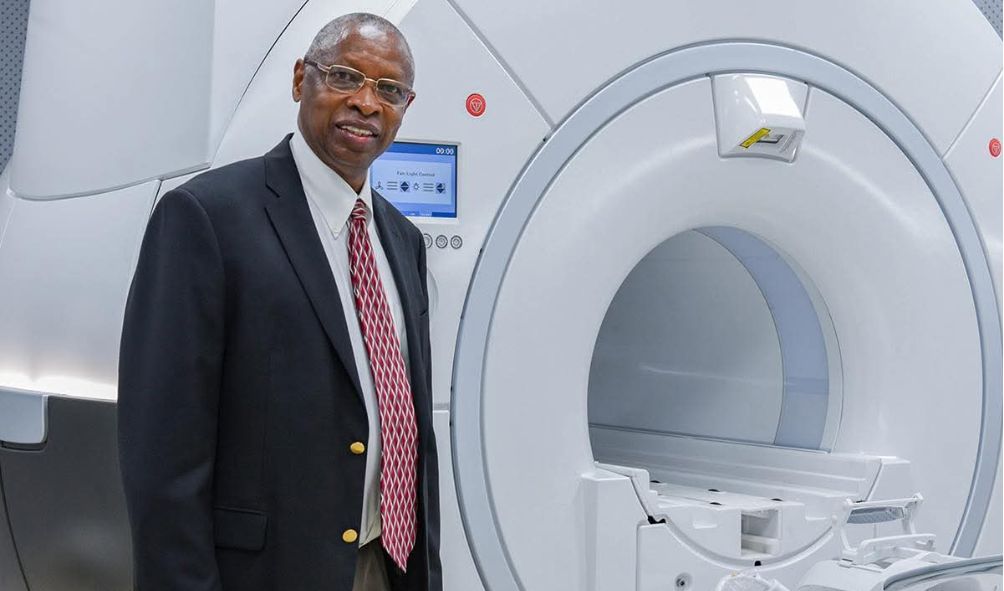
Kenyan scientist Professor George Njoroge has been awarded a Sh446 million grant to advance early identification and treatment of oesophageal cancer in Kenya.
Prof Njoroge, a co-lead researcher at Kenyatta University Teaching, Referral and Research Hospital (KUTRRH), has received the 2026 Greater Manchester Cancer Award.
He received the award alongside a UK-based team led by Professor Robert Bristow of the University of Manchester and The Christie NHS Foundation Trust.
Njoroge is widely renowned for inventing groundbreaking treatments and becoming the first African to obtain more than 100 US patents.
Kenyan Scientist Dr George Njoroge Wins Sh446 Million Global Cancer Grant
Kenyan chemist Dr George Njoroge has secured a Sh446 million international research grant to support early detection and treatment of oesophageal cancer in Kenya.
The funding, provided by the National… pic.twitter.com/oXGZcZN6ny— Eng John Macharia (@EngJohnMachari1) May 21, 2026
The funding will support a joint research project involving Kenyatta University Teaching, Referral and Research Hospital (KUTRRH), the University of Manchester and The Christie NHS Foundation Trust.
They were awarded by the United Kingdom’s National Institute for Health and Care Research (NIHR).
Njoroge, a renowned organic chemist and drug discovery expert, is widely celebrated in global scientific circles for helping discover Victrelis, the first hepatitis C virus protease inhibitor approved by the US Food and Drug Administration in 2011.
He also spearheaded the discovery of the anti-cancer drug Sarasar, later approved as Zokinvy for the treatment of progeria, a rare genetic ageing disorder.
His work earned him induction into the American Chemical Society Hall of Fame as a Hero of Chemistry in 2012.
Over the years, he has published more than 130 scientific papers in peer-reviewed journals and secured over 100 US patents, becoming the first African scientist to achieve the milestone.
Congratulations to our Council Chair, Prof. George Njoroge, on this remarkable international recognition for advancing early cancer detection research.
His work continues to impact lives, and shine a spotlight on Kenyan excellence in research. 🌍🎓#FormNiDaystar pic.twitter.com/TDblSVx2Db— Daystar University (@DaystarUni) May 21, 2026
He has also received international honours, including the Thomas Alva Edison Patent Award and the Emerald Award for leadership in pharmaceutical research.
Born and raised in Kamuchege village in Lari, Kiambu County, Njoroge attended Kamuchege and Kiawairia primary schools before joining Thika High School and later studying Organic Chemistry at the University of Nairobi.
His passion for drug discovery was inspired by his grandmother, a respected herbal medicine practitioner in rural Kenya.
“The respect my grandmother received from society encouraged me to pursue a career where I could continue helping people in a similar way,” he said.
After graduating from the University of Nairobi, he pursued graduate studies at Case Western Reserve University in Cleveland, Ohio, before later working as a postdoctoral researcher at the University Hospitals of Cleveland.
His scientific work has contributed to discoveries in ageing, diabetes and infectious disease treatment.
Despite his international success, Njoroge says his focus remains on solving health challenges affecting Africans.
The latest award-winning project seeks to improve survival rates for oesophageal cancer patients through early screening, clinician training and community outreach programmes.
“We are very happy that the research has been successful,” Njoroge said.
“Early detection is critical because cancer is more treatable, less expensive to manage, and places a lower burden on society when identified at an early stage.”
The project began three and a half years ago after researchers identified late diagnosis as one of the biggest reasons behind the high mortality rate associated with oesophageal cancer in Kenya.
“The realisation was that mortality from oesophageal cancer is extremely high. Once a patient is diagnosed, the chances of survival are very low because most cases are detected too late,” he said.
To improve access to diagnosis, researchers introduced mobile clinics in Kisii, Nyeri, Nakuru, Kiambu and Meru counties.
The initiative also trained more than 400 clinicians and 500 community health workers while conducting over 1,000 endoscopic procedures.
“A mobile clinic was stationed in the counties so that patients could access diagnostic evaluation without travelling long distances for healthcare,” Njoroge said.
ALSO READ:
- Governor Proposes Law To Ban Petrol Motorbikes In Cities To Address Air Pollution
- EPRA Announces Fuel Prices For September-October Cycle
- Easy Coach Bus, Car Collide Leaving FIVE Dead At Kikopey, Gilgil
- Fatal Boat Accident Prompts Governor To Order For ALL Passenger Boats’ Inspection
- Kisumu Residents Heckle MP Millie Odhiambo Infront Of Ruto
Professor Robert Bristow, Director of the Manchester Cancer Research Centre, said the programme adapted mobile screening approaches used in Manchester’s lung cancer detection programmes.
“When placed in Kenya, we were able to increase screening access, detect cancers earlier and really develop community trust with patients,” Bristow said.
Researchers hope the findings will help shape Ministry of Health policies and support the expansion of early detection programmes for other cancers across Kenya.
“We think the findings that we’ve gotten will be very useful for scaling up the diagnosis of oesophageal cancer and through the Ministry of Health in Kenya, as well as the National Cancer Institute; we’re going to scale it up and do even other types of cancer,” Njoroge said.
He says his long-term dream is to establish a biotechnology company in Africa that nurtures young scientists and drives groundbreaking medical research on the continent.
Kenyan Researcher Breaks Barriers With Oesophageal Cancer Treatment Breakthrough