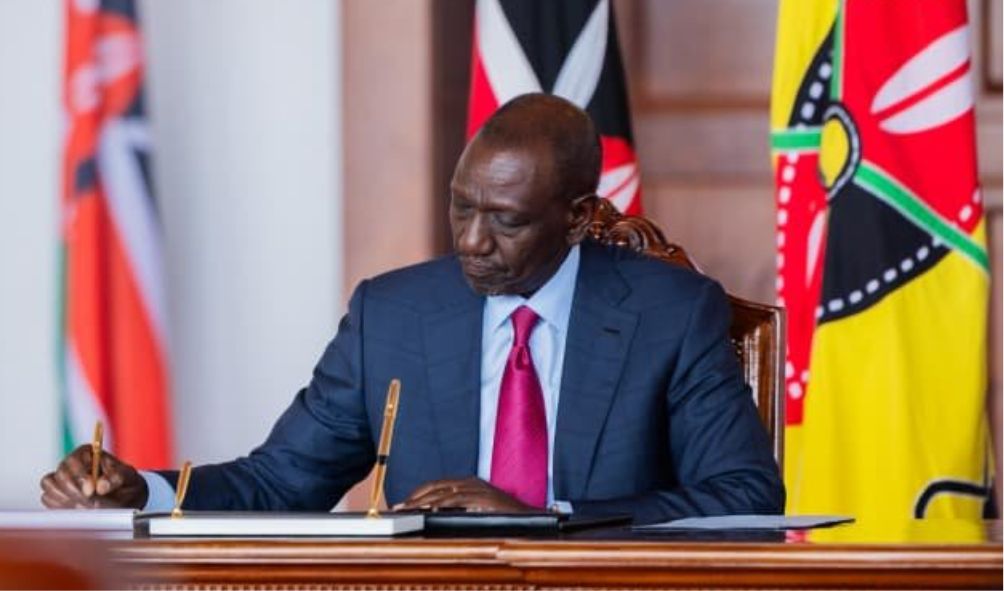
Ruto Signs The Controversial 2026 Finance Bill Into Law
President William Ruto has signed the Finance Bill 2026 into law, clearing the door for the implementation of the government’s financial strategy for the fiscal year 2026/27.
The President signed the Bill into law on Tuesday, June 23, during a ceremony at the State House in Nairobi, concluding the legislative process that began with its introduction in Parliament earlier this year.
The Bill was passed by the National Assembly on June 18 at its Third Reading, with parliamentarians voting to support the proposed measures.
However, just 162 of 349 MPs participated in the final vote, with 186 members missing the key session entirely.
Assented to the Finance Bill, 2026, and the Appropriation Bill, 2026, which provide the legal framework and resources required to finance our transformation priorities, create jobs, strengthen livelihoods and invest in the future.
The Finance Act, 2026, does not raise taxes.… pic.twitter.com/prqD1npDYx— William Samoei Ruto, PhD (@WilliamsRuto) June 23, 2026
Of the 122 “Yes” votes, 103 were electronic and 19 manual, while the 40 “No” votes comprised 36 electronic and four manual ballots.
This low turnout, one of the lowest since the controversial Finance Bill 2024 attracted public backlash, saw key champions of fiscal justice like Kiharu MP Ndindi Nyoro missing.
The bill, in and of itself, has ignited fierce debate among lawmakers, business groups, and citizens.
Several clauses have drawn criticism for their anticipated impact on living costs and business operations across Kenya.
🎥: President William Ruto assents to the Finance Bill, 2026 at State House, Nairobi on June 23, 2026, officially signing into law measures aimed at financing the 2026/27 budget#HomeOfHardTruths pic.twitter.com/gNzQLEGtuy— Radio Generation (@RadioGenKe) June 23, 2026
Landlords and tenant groups oppose the rental income tax hike from 7.5 per cent to 10 per cent through the bill.
They warned that the 33 per cent increase will be passed directly to tenants, worsening an already strained housing affordability crisis.
Business associations, including COFEK, have moved to court challenging the proposed shift of the tax filing deadline from June 30 to April 30, warning that the compressed window risks penalising compliant taxpayers.
ALSO READ:
- New Police Uniform Set To Debut On August 31, IG Kanja Confirms
- Relief For Sifuna-Led Faction As Tribunal Issues Temporary Party Name Protection
- Kenya Airways Set To Introduce New Service For All From 2027
- Parliament Approves Ruto’s Controversial Appointees To TSC
- EXPLAINER: Why It Will Take Two Years To Change Names On Birth Certificates
Critics warn that taxing digital and merchant service fees threatens Kenya’s progress toward a cashless economy.
Meanwhile, the proposed mitumba import tax threatens millions of low-income earners who depend on affordable second-hand clothing for their daily needs.
Financial experts, citing KPMG analysis of the bill, caution that treating undistributed profits as deemed dividends punishes reinvestment.
Additionally, gaming industry stakeholders argue the 20 per cent betting tax will drive users toward unregulated offshore platforms, ultimately reducing government revenue.
President Ruto signed the bill days before the anticipated June 25 Gen Z protest anniversary.
Ruto issued stern warnings against chaos, property destruction, or any attempted shutdown during the planned demonstrations.
Ruto Signs The Controversial 2026 Finance Bill Into Law