KNH Explains Cutting Down Trees That Left Marabou Stork Displaced
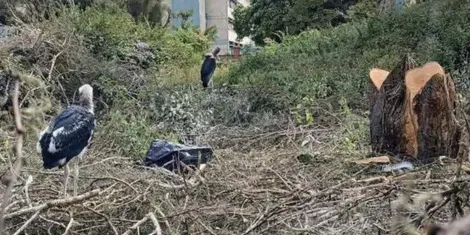
Kenyatta National Hospital (KNH) has defended its decision to cut down several acacia trees on its compound, after the move left dozens of marabou storks displaced and some dead.
From a notice shared on August 2, the hospital says the trees, some over 30 years old, had grown weak and were shedding branches that endangered patients, staff and visitors within the grounds.
The hospital explained its position after mounting public outrage, stating that falling branches had previously damaged steam pipes, crushed parked vehicles and, tragically, killed some of the birds nesting above them.
“Kenyatta National Hospital (KNH) has noted the concerns raised regarding the recent removal of trees within the hospital grounds and the reported impact on the marabou storks that had nested there,” KNH stated.
“The affected African acacia trees, which were over 30 years old, had become aged and decayed, resulting in the frequent falling of branches and posing a significant safety risk,” the statement read.
“In the past, falling trees and branches have damaged steam pipes, fallen onto parked vehicles, created safety hazards and, regrettably, resulted in the death of some of the birds nesting in the trees.”
KNH stressed that a technical assessment carried out ahead of the rainy season reportedly confirmed that the trees posed a serious safety risk to everyone within the facility.
KNH insists the tree felling exercise was meant to protect patients, staff, visitors and hospital property, while also safeguarding the storks from further harm.
The hospital’s Chief Executive Officer, Dr Richard Lesiyampe, said the decision was necessary and preventive, and not an attack on the birds or their habitat.
Members of the public had earlier raised concerns after images emerged showing injured and displaced marabou storks following the sudden removal of their nesting acacia trees.
ALSO READ:
- KNH Explains Cutting Down Trees That Left Marabou Stork Displaced
- Uasin Gishu Governor Finally Responds To Finland Scholarship Fiasco
- Uhuru’s ‘Super Coalition’ Rumors Causes Jitters In Kenya Kwanza Camp, Ruto Allies Vow To Fight
- U.S Makes Fresh Changes In Visa Processing Affecting Missions In Africa
- Death Toll From Eldoret-Nakuru Highway Accident Rises To 12
Many Kenyans online questioned why environmental assessments seemed to have been skipped before the trees came down, especially given the storks’ long presence at the hospital.
“They cut down the acacia trees this week at Kenyatta National Hospital. The marabou storks that had nested there for decades didn’t have anywhere to go,” one netizen stated.
“Some died. Some got injured. All because nobody thought to check what was living in those branches first.”
Experts note that marabou storks play a crucial ecological role, acting as natural scavengers that help clean up organic waste and carcasses in the city.
However, their droppings and constant noise have often triggered heavy pruning or felling of urban trees by city authorities over the years.
KNH now says it is working with relevant government agencies to ensure the affected storks are cared for, and has promised a tree replacement programme across its grounds.
KNH Explains Cutting Down Trees That Left Marabou Stork Displaced