IEBC Reveals Millions Set To Be Used On November 27 By-Elections
The Independent Electoral and Boundaries Commission (IEBC) has stated that the 22 impending by-elections throughout the nation are expected to cost around Sh700 million.
According to IEBC Commissioner Ann Nderitu, the majority of the expenditure goes toward logistics and the deployment of electoral officials.
Speaking about the scope and cost of the polls, Nderitu stated that managing by-elections in Kenya is a complex and resource-intensive process.
“The biggest cost drivers are electoral officials, the procurement of materials, and the logistics involved in transporting everything to polling stations. These elements carry the heaviest burden,” Nderitu explained.
The Commission led by Chairperson @EEEthekon has this evening received the first batch of 10 pallets containing ballot papers and statutory forms for the upcoming 27th November 2025 by elections.
— IEBC (@IEBCKenya) November 19, 2025
The final batch of 29 pallets will be arriving tomorrow evening at 1930hrs.… pic.twitter.com/3uTZbguvAe
She stated that electoral officials must undergo thorough training to ensure the integrity and efficiency of the voting process.
Coordinating their deployment across many locations, from urban hubs to distant locales, complicates logistics.
“For instance, in Baringo County, we must carefully deploy vehicles to transport materials and personnel,” she said during a TV interview.
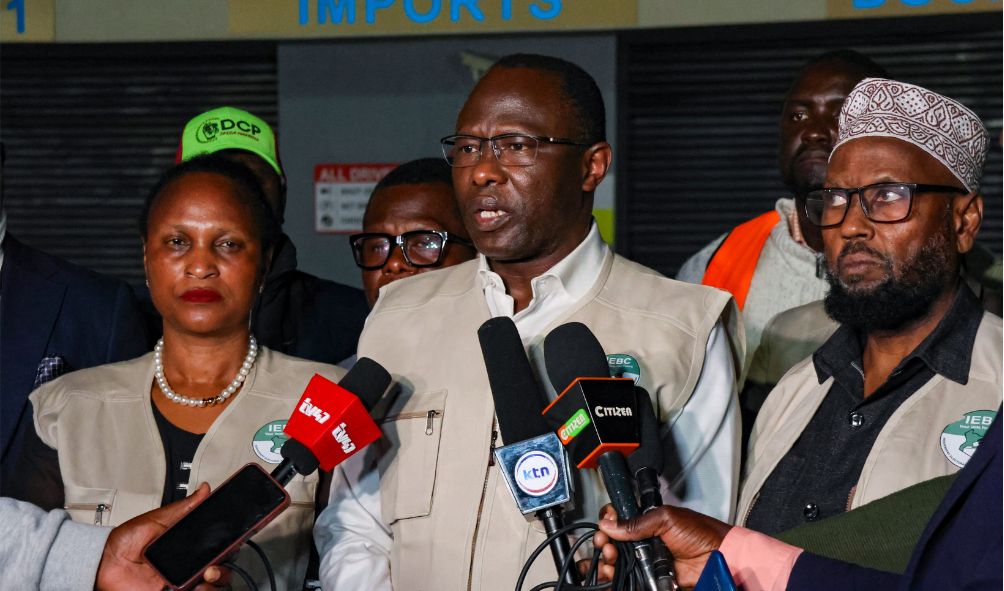
IEBC officials led by Erastus Edung receive the first Batch of Ballot Papers for the 27th November By-elections pic.twitter.com/VSSE2mK5mu
— The Standard Digital (@StandardKenya) November 19, 2025
“In some far-flung locations, such as Banisa in Wajir and parts of Turkana, we even use flights to ensure that ballot papers arrive safely. This is necessary to prevent delays and guarantee security.”
Beyond manpower, Nderitu stated that electoral materials constitute a considerable expense.
Ballot papers, seals, stamps, and indelible inks all come with stringent security protocols.
“The ballot papers used in Kenya have more security features than currency notes,” she said.
“This is because our elections are designed not just to manage votes, but to manage trust.”
Adding, “Citizens must have confidence that their votes are secure, that the counting process is transparent, and that results reflect their true choice.”
Commissioner Nderitu also emphasized the significant investments in technology that have been made to improve electoral transparency.
The cost includes systems for tracking voter identity, tracing votes, and auditing tallies, guaranteeing that the entire election process is verifiable and trustworthy.
The IEBC’s cost reflects the specific obstacles of holding fair elections in Kenya, where trust is essential.
“In other countries, the cost of elections is far lower because they do not have the same level of public scrutiny or security requirements.
ALSO READ:
- Kenya’s David Munyua Heads Back To PDC World Darts Championship
- A Man Dies In Police Custody, Family Says Victim Had Mental Illness
- DP Kindiki Makes A Ksh39 Billion Projects’ Pledge To Meru, Slams Local Leaders
- FKF Issues Way Forward On Kenya Premier League’s New Season
- Court Rules On 8 Utumishi Girls Fire Suspects, Explains Reasons Behind
“For example, in certain jurisdictions, ballot papers are printed at polling booths with standard printers and no additional security precautions,” Nderitu stated.
She highlighted Sweden as a counterexample.
According to her, political parties in that country distribute their own ballot papers, with the Electoral Commission serving primarily as a supervisor.
The Sh700 million spend, she remarked, demonstrates the complexity, scope, and high stakes of election management in Kenya, where ensuring credibility and transparency necessitates major investment in both human and logistical resources.
IEBC Reveals Millions Set To Be Used On November 27 By-Elections