Kenya Breaks Silence On U.S-Israel Attack On Iran, Issues Advisory To Kenyans
Kenya is keeping a careful eye on the changing circumstances in the Middle East, according to Foreign Affairs Principal Secretary Korir Sing’Oei, who has advised Kenyans residing in the area to use caution.
Sing’Oei said in a statement released in the midst of escalating tensions that the government is in continuous contact with its diplomatic missions to guarantee the security and welfare of Kenyan citizens.
“We are following with deep concern the evolving situation in the Middle East and are in close communication with our diplomatic Missions,” he said.
We are following with deep concern the evolving situation in the Middle East and are in close communication with our diplomatic Missions. We urge Kenyans in the region to exercise caution. We stand in solidarity with countries calling for de-escalation and a return to UN Charter…
— Korir Sing'Oei (@SingoeiAKorir) February 28, 2026
The PS advised Kenyans living in impacted nations to exercise caution and follow any safety instructions provided by Kenyan embassies and local authorities.
“We urge Kenyans in the region to exercise caution,” Sing’Oei stated, adding that the government stands ready to provide necessary consular support where required.
There are thousands of Kenyans living and working in the Middle East, especially in the Gulf, where many of them work in industries including construction, hospitality, healthcare, and domestic work.
Sing’Oei underlined Kenya’s support for diplomatic efforts to reduce tensions and restore regional stability.
The Embassy of Kenya in Doha is closely monitoring recent developments in Qatar and the wider Middle East and remains in contact with Qatari authorities.
— Kenya Embassy Qatar (@KenyaDoha) February 28, 2026
We urge the Kenyan community to remain calm, follow official guidance, and rely on verified government platforms for updates.
“We stand in solidarity with countries calling for de-escalation and a return to UN Charter-based mechanisms for resolving matters in dispute,” he said.
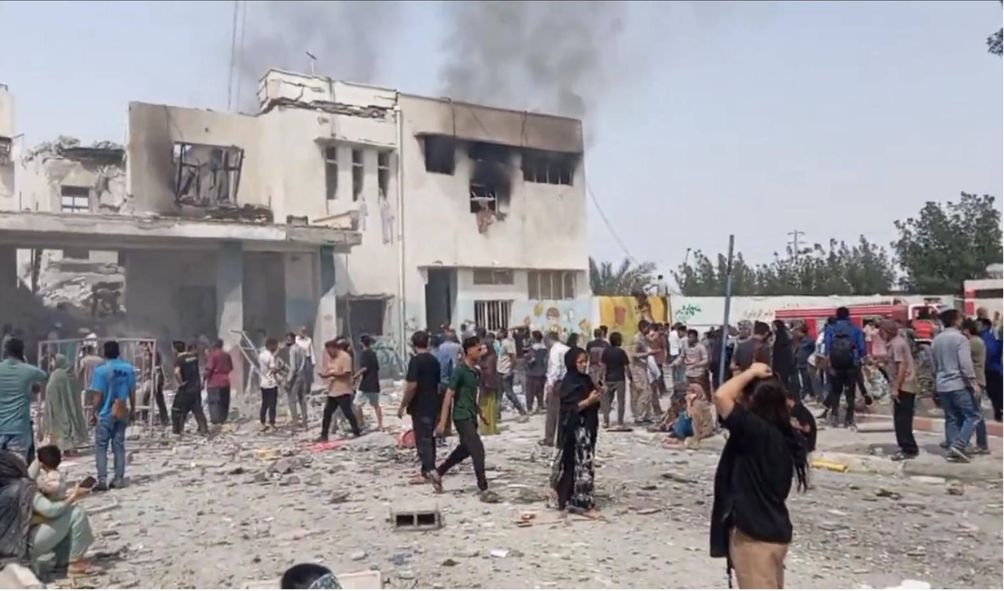
The PS statement comes amid a rapid escalation of hostilities in the Middle East, following reports of coordinated military strikes by the US and Israel against Iranian military installations.
This prompted Iran to launch retaliation missile attacks on numerous areas in the Gulf region.
Israeli and US authorities described the strikes as preemptive operations against “imminent security threats,” and they reportedly targeted important military facilities, air defense systems, and strategic command centers within Iran.
Loud explosions were reported in several places, with authorities in Tehran confirming damage to certain installations and promising a “proportionate response.”
Within hours, Iran launched retaliatory missile and drone attacks aimed at sites in the Gulf believed to host U.S. military assets.
Air defence systems were activated in several countries, with interceptions reported over parts of the United Arab Emirates, Qatar and Kuwait.
Some civilian areas were placed on heightened alert, and emergency response units were deployed as a precautionary measure.
The rapid exchange has raised fears of a wider regional confrontation, with neighbouring states reinforcing security around critical infrastructure, including oil facilities, ports and airports.
ALSO READ:
- “100 Police Officers Live In My Compoud!” – Raphael Tuju Says
- Trump Warns Ships That Pays Toll Fee At Strait Of Hormuz, Says ‘Won’t Be Safe In High Seas’
- Kenya’s Popular Podcast Broken Into, Equipments Stolen
- EXPLAINER: Inside New Proposed SHA Contribution Changes Affecting ALL Kenyans
- Goons Disrupt Niko Kadi Initiative In Kitale, Local Leaders Blamed
Amid the escalating tension, several governments temporarily closed portions of their airspace over the Gulf and surrounding regions.
Major international airlines, citing safety concerns, have cancelled or rerouted flights that normally pass through Middle Eastern airspace.
Travellers faced sudden disruptions at airports in Doha, Dubai, Abu Dhabi, and Riyadh, with some flights delayed indefinitely as authorities reassess safety risks.
Airlines are advising passengers to stay in contact with their carriers and monitor official updates closely.
Regional airports have activated emergency response protocols to manage the influx of stranded travellers.
Kenya Breaks Silence On U.S-Israel Attack On Iran, Issues Advisory To Kenyans