OUTRAGEOUS! Mt Kenya MP Proposes Use Of Kikuyu Language In Parliament Sessions
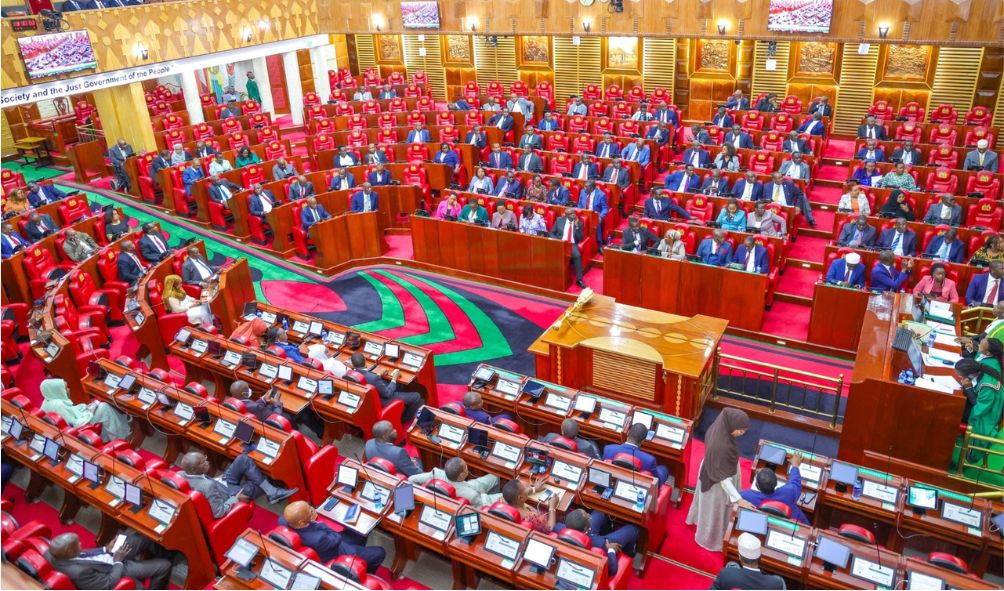
Juja Member of Parliament John Kiomburi has come out with an odd proposal as he revealed plans to push for the National Assembly to adopt the Kikuyu language for conducting the business of the house.
During a press briefing on March 17, MP Kiomburi stated that he will table a motion in the National Assembly to adopt a language to be used for two hours at every sitting of parliament.
“I am going to make sure that I table a motion in parliament for Kikuyu language to be used to conduct the business of the house,” stated Kiomburi.
He argues that the move is to ensure that the Kikuyu people know they have proper representation in the National Assembly and to help the community acquire the respect they so badly desire.
He adds that the community has the largest population in the country, and even non-native citizens nationwide are well-versed in the language.
“We want to make sure that the Kikuyu people have proper representation in Parliament, and also because Kikuyu language is spoken with a majority of the people, including non-natives,” highlighted Kiomburi.
The MP goes ahead to drum up support from the government to help not just pass the motion in the National Assembly, but also reinforce its implementation.
According to the Kenya National Bureau of Statistics (KNBS), the Kikuyu community is the largest ethnic group in Kenya, representing approximately 17 per cent to 22 per cent of the country’s population, with a population exceeding 8 million according to the 2019 census.
They are primarily found in Central Kenya and are a Bantu ethnic group.
The Luhya community follows with over 7 million speakers, Kalenjin with over 6 million, and then the Luo with just over 5 million speakers nationally.
The Constitution of Kenya recognises three official languages used in Parliament: English, Kiswahili, and Kenyan Sign Language, as provided for under Article 120, which governs proceedings in the National Assembly and the Senate.
ALSO READ:
- Kenya’s David Munyua Heads Back To PDC World Darts Championship
- A Man Dies In Police Custody, Family Says Victim Had Mental Illness
- DP Kindiki Makes A Ksh39 Billion Projects’ Pledge To Meru, Slams Local Leaders
- FKF Issues Way Forward On Kenya Premier League’s New Season
- Court Rules On 8 Utumishi Girls Fire Suspects, Explains Reasons Behind
Article 120(1) establishes this constitutional mandate, while Standing Orders 77 and 223 encourage the wider use of Kiswahili in debates, with the main aim of enhancing inclusivity, accessibility, and national linguistic representation.
Members of Parliament often mix English and Kiswahili during contributions, ensuring flexibility.
In cases of conflicting versions of legislation, however, the English text generally prevails for final official legal interpretation.
The question of whether the motion by Juja MP will see the light of the day in the Kenyan Parliament is a matter of wait and see.
OUTRAGEOUS! Mt Kenya MP Proposes Use Of Kikuyu Language In Parliament Sessions