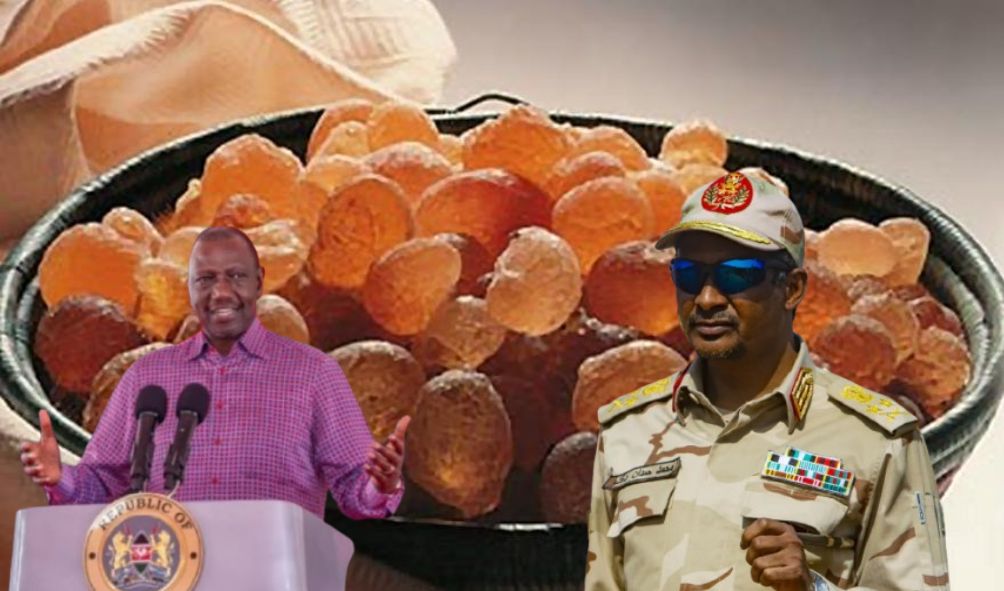
ABSURD! Kenya Involved In Illegal Export of Sudan’s Precious Soft-Drink Additive
Kenya’s Port of Mombasa has emerged as a critical transit hub for the illegal export of gum arabic, an important emulsifier found in widely consumed beverages and confections.
According to Reuters, this natural gum, which is primarily grown in Sudan, is transported through combat zones by the Rapid Support Forces (RSF), a formidable paramilitary group.
The gum arabic trade is helping to finance the RSF in #Sudan. It's just one of several resources with illicit markets implicated in the conflict, including gold and oil https://t.co/WQujnzobn2
— Conflict and Environment Observatory (CEOBS) (@ceobs_org) March 4, 2025
The RSF has established itself in Kenya, with the government stating that offering a platform for debate is consistent with Kenya’s longstanding role in regional peace efforts.
Gum Arabic, obtained from Acacia tree sap, is used as a stabilizer in a variety of items, including soft drinks and candy.
Sudan accounts for nearly 80% of the world’s supply of this commodity.
However, the current civil upheaval has hindered legitimate harvesting and export processes, resulting in an increase in criminal trafficking.
According to traders interviewed by the journal, the RSF’s control over important gum-producing regions has forced dealers to take risky routes, frequently resorting to smuggling to neighboring countries such as Kenya.
Without adequate certification, illicit gum arabic enters worldwide markets, undercutting global corporations’ efforts to maintain ethical supply chains.
Kenya produces gum arabic, which is largely obtained from the Acacia Senegal and Vachellia seyal trees that grow abundantly in the country’s northern areas.
Despite a production potential of 12,000 metric tonnes per year, the current output is at 400 metric tonnes.
Kenya’s strategic position and well-developed port infrastructure make it an appealing destination for such illegal activities.
According to a wholesale buyer situated outside Sudan, the Port of Mombasa is a major location for consolidating contraband gum arabic before shipping it to global markets.
Sudan still supplies 80% of world's acacia gum (gum arabic) medically used to treat wounds, inflammation. Still laboriously hand-harvested. pic.twitter.com/WexgpGx5CS
— James Hall (@hallaboutafrica) August 28, 2017
The government’s export numbers reflect a complex trading landscape. Export earnings reached a record high of KSh1 trillion in 2023, up 15.4 percent from the previous year.
Tea (KSh188.7 billion) and horticulture (KSh187.4 billion) both made significant contributions.
However, the 78% increase in re-exports to KSh165.5 billion raises worries about the possible inclusion of illicit items, such as smuggled gum arabic.
According to Eurostat data, Kenya’s exports of the item increased from 16,000 kilogrammes in 2014 to 170,678 kilogrammes in 2023.
This is the third-largest export of the commodity during the same time period. Kenya exported the most gum arabic in 2016, totaling 235,138 kilogrammes.
- Kenya’s David Munyua Heads Back To PDC World Darts Championship
- A Man Dies In Police Custody, Family Says Victim Had Mental Illness
- DP Kindiki Makes A Ksh39 Billion Projects’ Pledge To Meru, Slams Local Leaders
- FKF Issues Way Forward On Kenya Premier League’s New Season
- Court Rules On 8 Utumishi Girls Fire Suspects, Explains Reasons Behind
The mixing of normal and illegal trade endangers not only Kenyan exports’ reputations but also the global supply chain for key commodities.
Companies that rely on gum arabic are under increased pressure to ensure the authenticity and ethical origin of their supplies.
The international world is concerned about the RSF’s control over gum-producing areas and the resulting smuggling activities.
The United Nations has observed an increase in flights from the United Arab Emirates to Chad, allegedly delivering weapons to Sudanese rebels, aggravating the violence and hampering efforts to calm the region.
ABSURD! Kenya Involved In Illegal Export of Sudan’s Precious Soft-Drink Additive