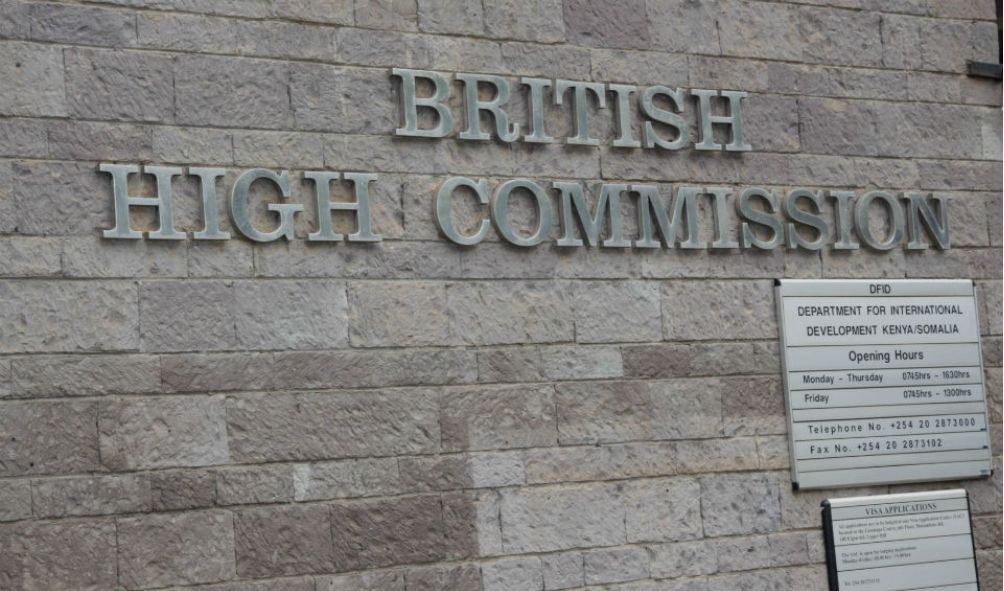
UK Issues Warning to Kenyans About Visa Application
Kenyans looking for UK visas have been warned to remain vigilant after the UK authorities discovered an extensive scam aimed at visa applicants.
The British High Commission in Kenya issued a statement on Monday warning that scammers had become more brazen, using phone calls, emails, and false websites to deceive applicants into disclosing personal information.
“If you receive an unexpected email, telephone call or letter from someone who claims to be from the Home Office, it may be a scam. We will never contact you to ask for money or your personal details,” a statement from GOV.UK.
This is the central online platform for government departments, agencies, and public institutions.
According to the UK government, criminals known to telecommunications firms in Kenya and overseas use phone calls and official-looking emails to suggest they can “easily” assist an applicant in obtaining a UK visa, claiming a problem with their initial application.
The scammers go to great measures to use official-sounding language, fake documents, or job offer letters that appear real.
Because they know personal information about their targets, their scams appear highly believable.
The most typical frauds involve job promises followed by requests for a visa or processing costs.
The Commission underlined that visa application processes have no shortcuts, and that no genuine business will request payment for a visa.
Furthermore, the panel emphasized that anyone who claims to “guarantee” a job should be viewed as a fraudster.
The commission also discovered another scam in which people pretended to be Home Office or Visa Application Centre staff.
Before demanding payment via worldwide money transfer platforms, the impostors visit applicants’ houses or call them, stating there was a severe difficulty with their application. Students are particularly vulnerable to this swindle.
Another sophisticated technique involves the fraudsters asking applicants for UK work or study visas to submit a small deposit as “proof of financial capability”.
The commission clarified that, while applicants must provide evidence of funds during the application process, the Home Office will never request money as proof.
“You should pay attention to any documents you receive or submit as part of your application to check they are genuine,” the commission warned.
“This includes looking for spelling or grammar mistakes and incorrect letterheads or branding.”
Official UK Government Websites
To reduce the danger of falling for scams, the commission reminded Kenyans that official UK government websites always end in gov.uk.
ALSO READ:
- Niger Withdraws From International Criminal Court, Labels It Neocolonialist
- DPP Approves 16 Murder Charges Against NINE Utumishi Girls Students
- Satellite Images Contradict Duale’s Claims On Ebola Facility Construction
- Quarantine Scare Forced Ruto To Cancel Congo Trip – CS Duale
- CS Ruku Issues Directive To State Agencies On Citizen Services At Huduma Centres
Similarly, there is an official Home Office email that has a certain format and terminates in gov.uk. Before responding, applicants are encouraged to double-check their email address.
Further, applicants have been urged to question offers that sound too good to be true, and if one suspects fraud, personal information shared should be kept to a minimum.
The High Commission urged victims or potential victims in the UK to report to the UK’s national fraud reporting centre known as Action Fraud. Those outside the UK, meanwhile, should report to their local authorities.
UK Issues Warning to Kenyans About Visa Application