“Don’t Discriminate Against The North!” – ODM’s Oburu Tells Ruto On Infrastructure Fund Use
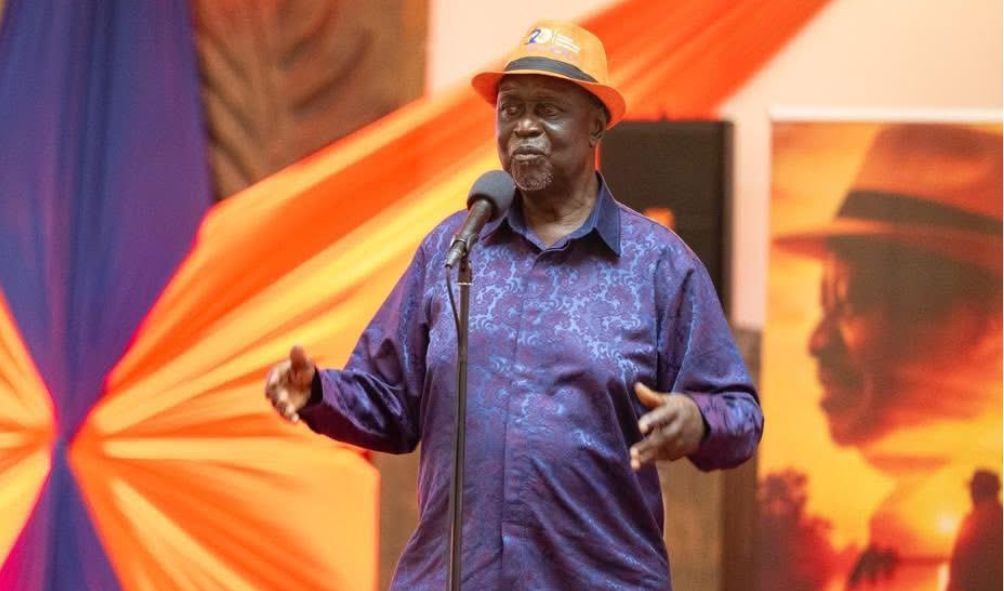
Orange Democratic Movement (ODM) party leader Oburu Odinga has warned President William Ruto from discriminating against regions under the newly launched National Infrastructure Fund.
While speaking during an Iftar celebration at State House, Mombasa, on Friday night, Oburu did not mince his words while urging the government to use NIF as a tool to speed up development in Northern Kenya, which he says has been discriminated against for years.
“The independent government wrote a Sessional Paper No. 10 of 1965, which said all the investments of Kenya will go to the places where the return on a shilling is highest,” Oburu told President William Ruto.
“That means we invest in high-potential areas and we exclude arid and semi-arid places.”
Data shows that while five counties, Nairobi, Kiambu, Mombasa, Nakuru, and Machakos, generate nearly 49 per cent of Kenya’s GDP, 16 counties, mostly in the North, contribute just 7.5 per cent.
Sessional Paper No. 10 of 1965, published shortly after independence, was championed by Tom Mboya, who was serving as the then Minister for Economic Planning and Development and his assistant, Mwai Kibaki.
The paper stipulates that to maximise economic growth, “development money should be invested where it will yield the largest increase in net output”, a policy often referred to as the “high potential” or “shilling for a shilling” approach.
This strategy focused investment on fertile, well-connected regions, which critics argue led to the long-term marginalisation of arid and semi-arid areas.
According to Oburu, this has resulted in inequality that can be evened out by the National Infrastructure Fund.
“Mr President, I hope this Infrastructure Fund will not discriminate against the North. It must be used to open the infrastructure in the north,” Oburu urged.
As of 2024-2025, poverty rates in Northern counties such as Turkana (82 per cent), Mandera (72 per cent), and Samburu (71 per cent) contrast sharply with Nairobi (16 per cent) and Kiambu (19 per cent).
ALSO READ:
- Governor’s Bodyguards Shoot, Injured Three People Over ‘One Term’ Chants
- Late MP Ng’eno’s Brother Dies Hours After Gachagua Visit
- Senator Khalwale Reveals Why Ruto Was Absent At Wife’s Burial Amid High-Profile KK Snub
- Gachagua Promises To Fully Support Late MP Ng’eno’s Family, Build Mausoleum
- High Court Orders DCI, Police To Produce Missing Nairobi Businessman
Furthermore, the average resident in Nairobi has access to roughly 11 times more wealth than an average resident in Mandera.
Through NIF, the government aims to mobilise nearly Ksh5 trillion over the next decade to close the infrastructure financing gap.
The fund received its first capital injection of Ksh163 billion from the sale of the Kenya Pipeline Company earlier this month.
The primary goal is to reduce reliance on costly sovereign borrowing and taxpayer-backed loans by tapping into local savings, pension funds, and private equity.
“Don’t Discriminate Against The North!” – ODM’s Oburu Tells Ruto On Infrastructure Fund Use