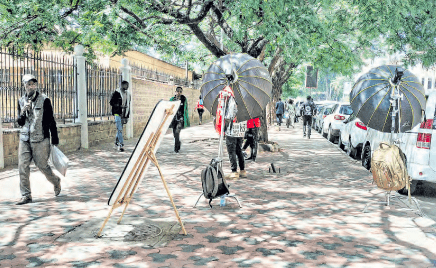
Governor Sakaja Clarifies New Charges Targeting Creators, Film Makers
Nairobi Governor Sakaja Johnson has clarified that charges contained in the Nairobi City County Finance Act, 2026, do not target ordinary content creators, influencers or small-scale digital creators.
Sakaja said the charges were intended to regulate professional and commercial film productions that require significant use of public spaces and county infrastructure.
“These charges were never intended to target ordinary content creators, influencers or young people creating digital content,” Sakaja said.
“Our intention is to regulate professional and commercial film productions that require significant use of public spaces and infrastructure.”
He said there was a clear distinction between an individual shooting social media content and a large film production involving crews, specialised equipment, vehicles and extensive use of public spaces.
“There is a clear difference between a content creator shooting a video for social media and a large film production arriving with a crew, equipment, and vehicles and requiring the temporary closure or controlled use of a road. That is who we are targeting,” he said.
The Finance Act lists charges of Sh8,000 per shooting for local commercial filming, Sh50,000 for external commercial filming, Sh8,000 for religious or private filming and Sh10,000 for music video production.
It also provides for a Sh40,000 annual charge for content creation studios.
Sakaja said the county recognises the creative sector as an important source of livelihoods, particularly for young people, and a platform for promoting Nairobi locally and internationally.
- New Police Uniform Set To Debut On August 31, IG Kanja Confirms
- Relief For Sifuna-Led Faction As Tribunal Issues Temporary Party Name Protection
- Kenya Airways Set To Introduce New Service For All From 2027
- Parliament Approves Ruto’s Controversial Appointees To TSC
- EXPLAINER: Why It Will Take Two Years To Change Names On Birth Certificates
“Since we came into office, we have deliberately created space for filmmakers and content creators to work freely in Nairobi because we recognise the creative sector as both a source of livelihoods and a powerful way of marketing our city to the world,” he said.
“We will not introduce measures that stifle that creativity.”
The governor said his administration remains committed to supporting Nairobi’s creative economy while establishing a clear framework for large-scale commercial productions that require extensive use of public infrastructure.
He reiterated that the objective was not to burden content creators but to distinguish between everyday digital content creation and professional film productions requiring substantial use of public spaces and county facilities.
Governor Sakaja Clarifies New Charges Targeting Creators, Film Makers