Ruto Secures First Goodies For Kenyan Produce In China Amidst Export Challenges
Kenya’s agricultural sector has received a significant boost as China pledges to expand its market for Kenyan produce, despite recent difficulties in the export of avocados and tea.
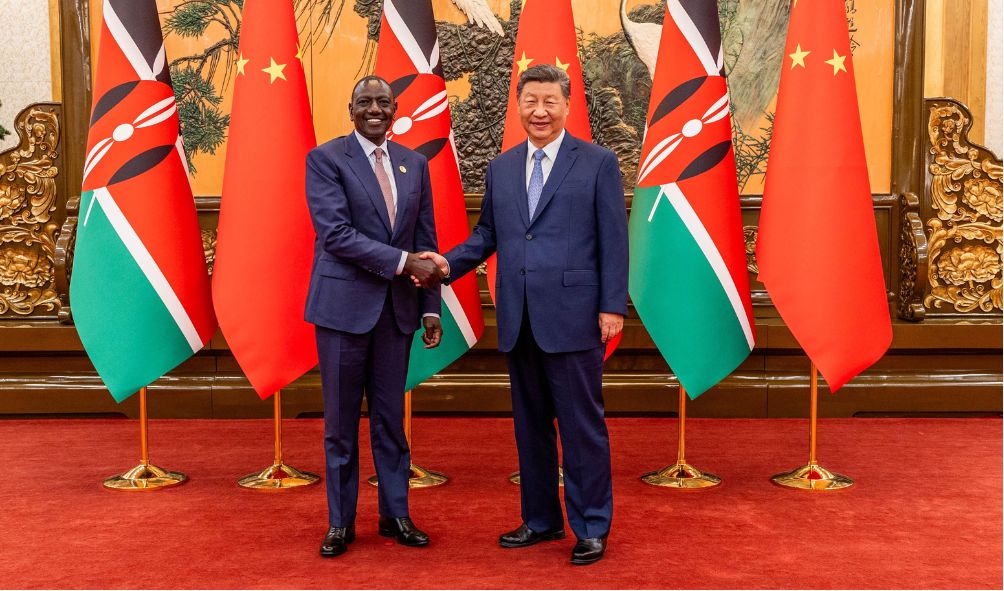
The commitment, confirmed by a statement from President William Ruto on X social media, comes after a crucial meeting with Chinese President Xi Jinping at the 2024 Forum on China-Africa Cooperation (FOCAC) Summit in Beijing.
Arrived in Beijing for the Forum on China-Africa Cooperation Summit. The meeting presents an opportunity for Africa to renew and strengthen its partnership with China.
— William Samoei Ruto, PhD (@WilliamsRuto) September 2, 2024
Over the years, China has proven to be a true development partner, significantly revamping our infrastructure.… pic.twitter.com/e7yfbsgvC1
Significance Of China-Kenya Cooperation
This new assurance comes as Kenya’s agricultural exports to China are eclipsed by mineral exports.
The potential for growth in Kenya’s trade balance with China, the world’s second-largest economy, provides a bright future for Kenyan farmers and exporters.
During their meeting, President Xi Jinping assured President Ruto that China’s vast population of over 1.4 billion people is still open to Kenyan agricultural produce.
Kenya and China have excellent and cordial diplomatic relations. These ties have been mutually beneficial to our two countries, phenomenally transforming Kenya's railway, road and port infrastructure, and deepening people to people exchanges.
— William Samoei Ruto, PhD (@WilliamsRuto) September 3, 2024
Through our bilateral cooperation… pic.twitter.com/j0qjlnUJpy
This is a significant development, given that Kenya’s avocado exports to China have dropped by 80% this year.
Kenyan exporters are shifting their focus to more lucrative markets in Europe and North America, accounting for the drop.
Imports From China To Kenya
Data from Chinese customs shows a significant drop in avocado imports from Kenya.
In the first seven months of this year, China imported only 742,934 kilogrammes of Kenyan avocados, compared to 3,674,463 kilogrammes at the same time last year.
As a result, the earnings from these exports have dropped sharply from $6,830,140 (Ksh881.1 million at current exchange rates) to $1,232,149 (about Ksh158.64 million in the current exchange rate).
Despite the market access granted to Kenya, the decline in avocado exports presents a challenge for Kenyan farmers, who have previously relied heavily on the European Union and are now looking to China’s massive consumer base to boost sales.
Kenya’s Top Exports To China
Kenya began exporting avocados to China in August 2022, a strategic move aimed at tapping into the country’s vast market.
Initially, exports were limited to frozen fruits, but this restriction has been lifted.
Kenya’s agricultural exports to China encompass a wide range of products.
According to United Nations COMTRADE data, Kenya’s top agricultural export to China remains ores, slag, and ash, valued at $110.89 million (Ksh14.3 billion) in 2023.
Other significant exports include edible fruits, nuts, citrus peel, and melons, valued at $25.69 million; fish and crustaceans at $18 million (Ksh2.3 billion); coffee, tea, and spices at $9.49 million (Ksh1.22 billion); and various textile and leather products.
Kenya’s total exports to China in 2022 were $239 million, or approximately Ksh30.77 billion.
Titanium ore was valued at $103 million (Ksh13.26 billion), while Niobium, Tantalum, Vanadium, and Zirconium ore was worth $41.5 million (Ksh5.34 billion).
The continued emphasis on mineral exports highlights the existing trade imbalance while also pointing to potential areas for growth.
President Ruto’s announcement also included plans for further discussions on regional infrastructure projects, such as the expansion of the Standard Gauge Railway (SGR) and the Rironi-Mau Summit to Malaba Dual Carriage.
Ruto Secures First Goodies For Kenyan Produce In China Amidst Export Challenges