Uhuru Reveals Why Kazi Mtaani Was COVID-19’s Best Response
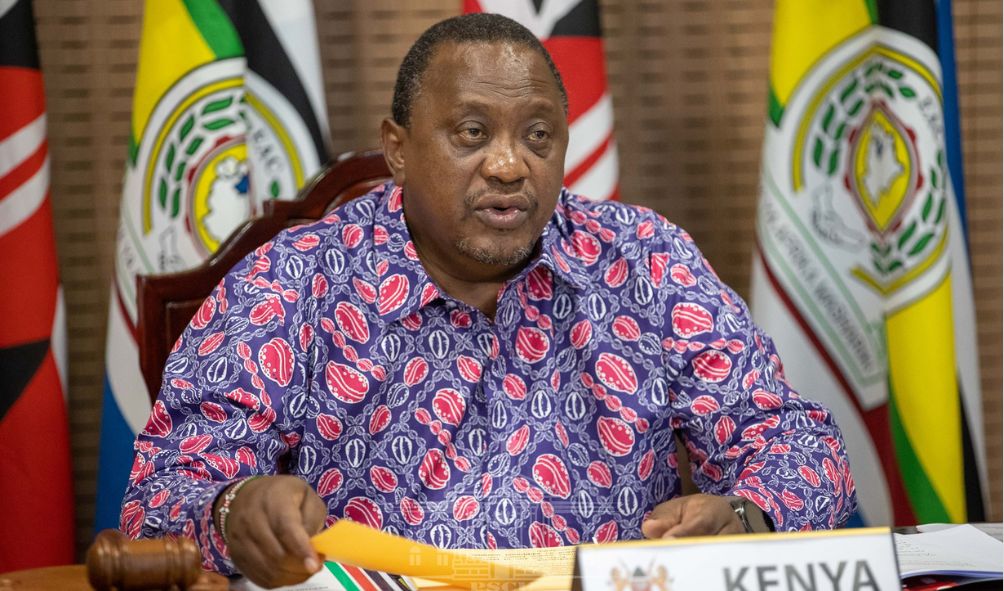
On Wednesday, January 29, 2025, retired President Uhuru Kenyatta explained why he initiated the Kazi Mtaani program during the height of the COVID-19 pandemic that ravaged the latter half of his government.
Uhuru stated that the program was designed to be a social endeavor to put money in the pockets of impoverished urban residents.
The former president spoke on the second day of the inaugural East Africa Region Global Health Security Summit, which is taking place at the PrideInn Paradise Beach Resort Convention Centre in Mombasa.
“Many urban citizens rely on a daily income to sustain themselves. With many casuals at home as a result of the lockdown without a source of income; the big question remained how could we effectively look after this part of our population,” Uhuru quipped.
“That is how my government came up with the Kazi Mtaani programme. The programme was intended to put money in people’s pockets to be able to sustain themselves during the difficult time.”
Uhuru Kenyatta: Unlike what some people tried to indicate that this was a political agenda (Kazi mtaani), It was totally aimed at ensuring Kenyans who were unable to go to their places of work had an opportunity to earn a living and support their families.#Mchipuko pic.twitter.com/iwDo2ZbsZq
— K24 TV (@K24Tv) January 29, 2025
The retired president addressed the three-day event in his capacity as AU-Kenya Peace Envoy and Facilitator of the EAC-led Nairobi Peace Process.
Uhuru also stated that he needed to persuade senior state personnel to accept pay cuts in accordance with the government’s austerity policies during the COVID-19 outbreak.
”Myself and the Deputy President took an immediate salary cut of 80 per cent while I ordered the Cabinet Secretaries to take a 30 per cent cut and Principal Secretaries 20 per cent; in order to show that commitment and leadership starts at the top,” Uhuru remarked.
During the lockdown, with many industries shuttered and public meetings limited, the scheme provided youth from numerous informal settlements across the 47 counties with a consistent source of income.
ALSO READ:
- Kenya’s David Munyua Heads Back To PDC World Darts Championship
- A Man Dies In Police Custody, Family Says Victim Had Mental Illness
- DP Kindiki Makes A Ksh39 Billion Projects’ Pledge To Meru, Slams Local Leaders
- FKF Issues Way Forward On Kenya Premier League’s New Season
- Court Rules On 8 Utumishi Girls Fire Suspects, Explains Reasons Behind
Kazi Mtaani’s Project.
The youngsters worked from 8:00 a.m. to 4:00 p.m., Monday through Friday, with the exception of public holidays.
Regular workers were paid Ksh450, while supervisors were given Ksh550 for working in shifts of two weeks.
During the epidemic, the World Bank praised the Kazi Mtaani project as transformative, citing a dramatic reduction in crime rates.
“I am happy to note that Kazi Mtaani, various tax reliefs and aid poise programs have reflected as a strong revenue performance for the country, increasing it by some 26.8 per cent,” Uhuru said on October 20, 2021.
Uhuru Reveals Why Kazi Mtaani Was COVID-19’s Best Response