Senate Saves Nyamira Governor From Impeachment
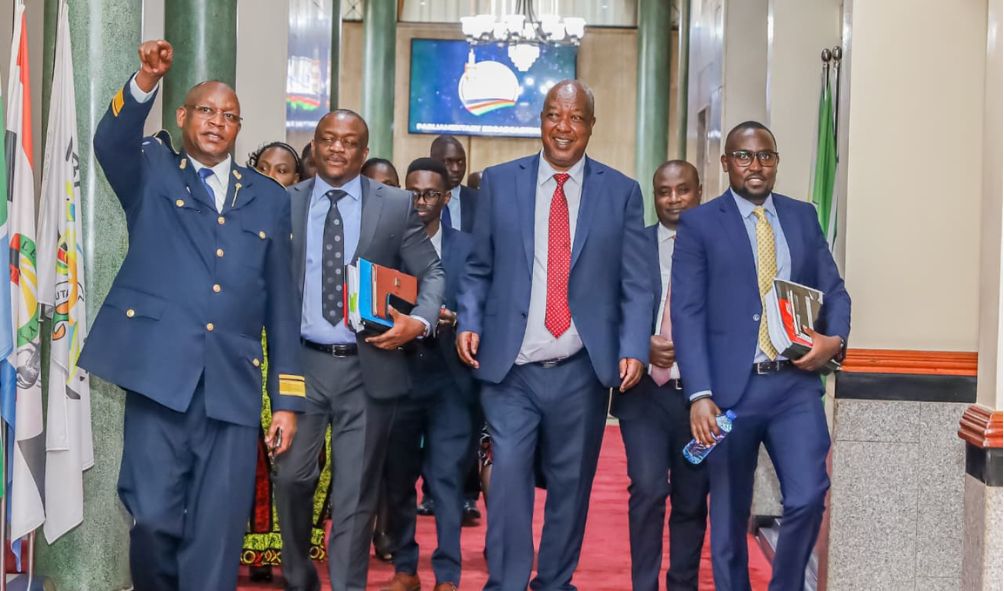
Embattled Amos Nyaribo, governor of Nyamira, has survived an impeachment motion.
The Senate sustained a preliminary objection, noting the Nyamira County Assembly’s failure to reach the legal threshold for removing a governor from office.
Thirty-eight senators decided to uphold the objection, while only four rejected it, therefore ending the impeachment proceedings on a technicality.
“The motion having been approved, the hearing of the proposed removal from office by impeachment of Amos Kimwomi Nyaribo, Governor of Nyamira County, is hereby terminated,” said Senate Speaker Amason Kingi.
BREAKING NEWS: Nyamira Governor Amos Nyaribo survives impeachment after Senate votes to save him pic.twitter.com/NxjPOaLKcw
— Mutembei TV (@MutembeiTV) December 3, 2025
The governor’s legal team contended that the assembly did not have the constitutionally requisite two-thirds majority to enact an impeachment motion.
Moving the motion to sustain the objection, Senate Majority Leader Aaron Cheruiyot questioned whether the topic had been properly presented before the Senate in the first place.
Cheruiyot criticized Parliament for failing to enact a comprehensive impeachment procedure bill.
The senator stated that many of the recurring disagreements, particularly those regarding numerical criteria and voting procedures, might have been avoided with appropriate legislation.
“If we had set out an impeachment procedure bill, we would not be debating these issues today,” he said.
“By now, we would be listening to the case by the county assembly and the governor’s response. But here we are, unfortunately.”
Nandi Senator Samson Cherargei underlined the concerns, claiming that impeachment is both a political and quasi-judicial procedure that must adhere to stringent procedural rules.
He underlined the numerical issue at the heart of the dispute: while both parties agreed that 23 MCAs voted, the two-thirds need mathematically equals 23.33 members, implying that the assembly required at least 24 votes.
“The principle under Section 33 has not been met,” Cherargei said. “Do we proceed like in Kericho II, or do we terminate like in Kericho I?”
However, Kakamega Senator Boni Khalwale disagreed with colleagues who favored ending the proceedings.
He argued that the Senate should allow the full trial to proceed so that contested issues—such as three MCAs who were reportedly absent—could be examined.
“This is the time for us to prosecute that matter,” he said. “We must guide county assemblies and guide this Senate on what to do when members are not in plenary.”
Senate Speaker Amason Kingi clarified the principles guiding the House’s handling of preliminary objections.
ALSO READ:
- Kenya’s David Munyua Heads Back To PDC World Darts Championship
- A Man Dies In Police Custody, Family Says Victim Had Mental Illness
- DP Kindiki Makes A Ksh39 Billion Projects’ Pledge To Meru, Slams Local Leaders
- FKF Issues Way Forward On Kenya Premier League’s New Season
- Court Rules On 8 Utumishi Girls Fire Suspects, Explains Reasons Behind
He noted that a pure preliminary objection deals only with points of law and does not rely on contested facts requiring evidence.
Embattled Nyamira Governor Amos Nyaribo has pleaded not guilty to six charges levelled against him as the Senate began hearings of his removal from office by impeachment pic.twitter.com/3uZQ6Ty2sA
— KBC Channel 1 News (@KBCChannel1) December 3, 2025
He cited precedents from the Kericho I and Kericho II impeachment cases.
Kingi concluded that determining whether the required threshold was 24 or 23 was a pure question of law that had to be resolved before the Senate could proceed further.
The Senate ultimately found that the threshold had not been met, ending the impeachment process.
Senate Saves Nyamira Governor From Impeachment