CS Mbadi Clarifies PAYE Tax Relief Plan Despite Absence From Budget
National Treasury Cabinet Secretary, John Mbadi, has told the public that the government has not abandoned its proposal for pay-as-you-earn (PAYE) tax relief for Kenyans earning less than Ksh 30,000, despite its absence from the Finance Bill.
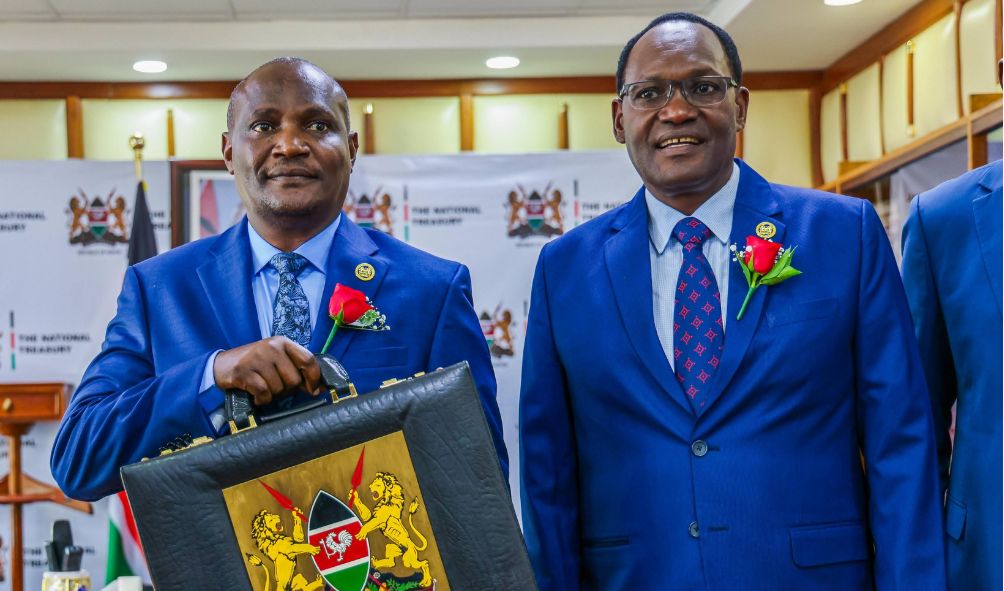
Speaking moments after reading the 2026/27 budget in parliament on Thursday, June 11, Mbadi stated that the proposal’s exclusion from the finance law should not be construed as a reversal of the prior promise.
According to the CS, the government is still finishing the statistical analysis for the idea before it is legally implemented.
“Even if it is not in the Finance Bill, it is not off the table,” Mbadi stated.
Budget: No PAYE reprieve
No tax relief for workers earning a salary below Ksh30,000
Ruto had promised tax relief for workers earning Ksh. 30,000
Mbadi says Ruto’s proposal is still under consideration
Mbadi: I want to assure you the promise will be implemented #CitizenTonight pic.twitter.com/p73yyclvmp— Citizen TV Kenya (@citizentvkenya) June 11, 2026
CS John Mbadi: I have deliberately chosen not to introduce new taxes or increase tax rates that will further overburden the hardworking Kenyans and their families. Instead, the measures are focused on reforms that improve efficiency in tax collection, create fairness in the tax… pic.twitter.com/sDw7PBCuay— Citizen TV Kenya (@citizentvkenya) June 11, 2026
“I have explained that there were some data analyses we were doing, and the President has pronounced himself that that is going to be implemented.”
His remarks come amid growing public concern after the relief failed to appear in the Finance Bill 2026, despite promises by President Ruto and the CS himself.
Mbadi insisted that the government remains committed to fulfilling the pledge, adding that the delay should not be mistaken for a change of position.
“We have committed. This government is not going to lie. Wait for that commitment. It is we who committed, and it is going to be implemented,” he added.
The PAYE Promise Goes Quiet:
The omission of the highly publicised plan to exempt Kenyans earning Sh30,000 and below from Paye in the 2026/27 budget statement has raised eyebrows.
Mbadi has insisted that the pledge will ultimately be implemented.#NTVTonight @Ben_Kitili pic.twitter.com/hNTwMwm8VV— NTV Kenya (@ntvkenya) June 11, 2026
Recently, Ruto committed to cutting PAYE for employed Kenyans earning below Ksh30,000 per month. This would be an increase in the current relief of Ksh 24,000 per month.
While speaking during the National Prayer Breakfast on Thursday, May 28, the Head of State directed the Treasury to develop proposals to remove PAYE deductions for workers earning up to Ksh30,000 monthly, up from the current threshold of Ksh24,000.
“I told the Treasury that it is time to look at how we can slow down, especially for the low-income earners, and remove some taxes from them,” Ruto disclosed.
How the Proposed PAYE Relief Would Be Implemented
The proposed PAYE relief is expected to benefit thousands of low-income workers by reducing the amount of tax deducted from their monthly salaries, leaving them with more disposable income.
ALSO READ:
- Kenya’s David Munyua Heads Back To PDC World Darts Championship
- A Man Dies In Police Custody, Family Says Victim Had Mental Illness
- DP Kindiki Makes A Ksh39 Billion Projects’ Pledge To Meru, Slams Local Leaders
- FKF Issues Way Forward On Kenya Premier League’s New Season
- Court Rules On 8 Utumishi Girls Fire Suspects, Explains Reasons Behind
Its exclusion from the Finance Bill had sparked speculation that the government could have shelved the plan amid pressure to raise revenue and fund key development projects.
For the tax relief to be actualised, the process begins at the National Treasury, where policy proposals are developed and supported by technical work, including data analysis to assess their fiscal impact and feasibility.
Once finalised, the proposal is then formalised through legislation, usually by being included in a Finance Bill or a separate tax amendment Bill tabled in Parliament.
MPs debate, may amend, and ultimately approve the changes before they can proceed.
After parliamentary approval and presidential assent, the Kenya Revenue Authority (KRA) is responsible for implementing the changes.
This includes updating tax systems and PAYE structures so that employers and employees can apply the revised tax relief in practice.
CS Mbadi Clarifies PAYE Tax Relief Plan Despite Absence From Budget