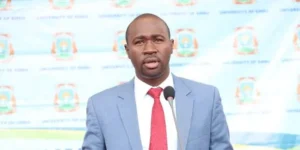
‘If I Want To Run, I Will!’ – Gachagua Says Impeachment Can’t Bind Him
Former Deputy President Rigathi Gachagua has stated that his impeachment does not prevent him from running in the 2027 elections, stating that he still has the constitutional right to compete for government.
In an interview with local radio stations on Tuesday, February 4, 2025, Gachagua denied that his impeachment had terminated his political career.
Gachagua mentioned other cases in which leaders ran for office despite facing legal challenges.
“It is not a must that I be Kenya’s leader; there are many people who can lead. I will be part of the team that will make decisions. But no one has stopped me from running for office-I have an ongoing court case,” he said.
Gachagua mentioned President William Ruto and former President Uhuru Kenyatta, noting that both ran for election in 2013 while facing indictments from the International Criminal Court (ICC).
Rigathi Gachagua: President Ruto offered me Ksh.2 billion to resign from office so that I could run in the 2027 elections. I am not selfish and don't need to be an elected leader in this country; however, if I want to, I will pic.twitter.com/GDMRqC35Ap
— Citizen TV Kenya (@citizentvkenya) February 4, 2025
“Uhuru Kenyatta and Ruto ran for office while they had cases at The Hague. Kenya’s Constitution is clear that if you have a pending court case, your right to contest for a seat cannot be taken away. So, if I want to run, I will run,” he said.
However, Gachagua stressed that his immediate goal is not his political future, but rather how to deal with the challenges facing Kenya.
“But that is not important right now. What matters most is how we organize and plan for this country,” he noted.
Gachagua’s claim that he is entitled to run in 2027 may face legal hurdles, particularly given previous verdicts and constitutional requirements governing leadership and integrity.
In July 2022, the Supreme Court declared that Sonko’s impeachment made him unfit for public service, establishing the precedent that impeachment has long-term consequences for political eligibility.
The Supreme Court upheld its verdict under Chapter Six of the Kenyan Constitution.
Rigathi Gachagua: I am an ordinary Kenyan, and I was told to return to Wamunyoro. I have many followers who believe in me, and I continue contributing to improving this country's leadership. When you speak the truth, you’re accused of being in the opposition pic.twitter.com/ptXldzNl0e
— Citizen TV Kenya (@citizentvkenya) February 4, 2025
This chapter states that anyone seeking public office must display ethical behavior and honesty.
ALSO READ:
- Kisumu Residents Heckle MP Millie Odhiambo Infront Of Ruto
- Gachagua Allied MP Hunted By Police, Says Summon Enough Not ‘Unnecessary’ arrest
- EXPLAINER: Clarification On ID Registration Rules For Kenyans Without Birth Certificate
- Nairobi Police Boss Bans Political Rallies in Ahead of Linda Mwananchi Rally
- Fresh Details Emerge From Chaos At DP Kindiki’s Meeting In Embu
According to Article 75(3), a person who is fired or removed from office for violating integrity provisions is ineligible to occupy another public office.
“Chapter Six of the Constitution was not enacted in vain or for cosmetic purposes,” the Supreme Court stated in its ruling on Sonko’s case.
“The authority entrusted to a state officer is a public trust that must be exercised in a manner that respects the people, upholds the nation’s honour, and promotes public confidence in the integrity of the office. It is the responsibility of the state officer to serve the people, not to rule over them.”
Similarly, Ferdinand Waititu’s ambition to run for governor in 2022 was thwarted by the Independent Electoral and Boundaries Commission (IEBC), following a High Court ruling confirmed his ineligibility due to impeachment.
‘If I Want To Run, I Will!’ – Gachagua Says Impeachment Can’t Bind Him