EXPLAINER: Why School Fires Frequently Happen In Kenya
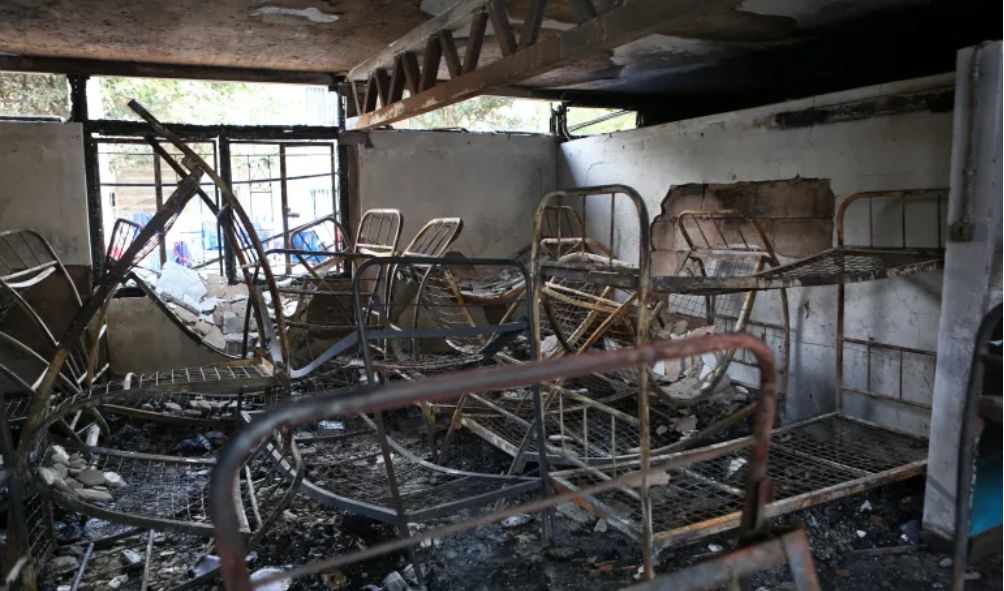
A fire at a boarding school for primary school-aged children in central Kenya killed at least 18 students, according to police.
According to authorities, more than a dozen children aged 12 and up from the Hillside Endarasha Primary School in Nyeri County were rushed to the hospital with severe burns following the blaze on Thursday. There are fears that the death toll will increase.
Distressed parents at Hillside Endarasha Academy after deadly night dorm fire killed 17 pupils pic.twitter.com/VasacnUpqU
— Citizen TV Kenya (@citizentvkenya) September 6, 2024
It is unclear what caused the school fire, but arson attacks on Kenyan boarding schools have become a worrying national trend.
Over the last two decades, more than 100 children have died as a result of school fires. Here’s what we know about the incident and what is causing Kenya’s school fire problem:
How Frequently Do School Fires Happen?
Unfortunately, yes, especially fires in boarding schools. In several cases, authorities have confirmed arson as the cause and have typically identified students as the perpetrators.
In 2016, Kenyan authorities documented 130 cases of school burnings caused by student unrest. Parliamentary records show that at least 63 arson cases were reported in 2018.
Fires broke out in boys’, girls’, and coeducational schools.
Many Kenyan parents choose to send their children to primary boarding schools because they believe they provide a more conducive learning environment.
According to the journal Kenya Studies Review, such schools generally provide better discipline and reduce the cost of daily transportation.
Parents at Hillside Endarasha Academy in Nyeri were overcome with emotion as they viewed what remained of their children's dormitory.
— AfricasNow (@AfricasNow24) September 6, 2024
A mysterious fire blazed through the 156-bed hostel around 11 p.m. Thursday, as boys at the mixed boarding private primary school slept.#RIP pic.twitter.com/At0iR2Tq0n
Arson is the leading cause of school fires, according to a study conducted by Isaac Muasya, a University of Nairobi researcher.
Faulty electrical appliances, such as electric cookers, and flammable substances, such as cigarettes, pose significant risks, according to Muasya’s study.
When are school fires most likely to start?
According to studies, arsons are typically committed at night and in school dormitories, where they can cause the most damage.
Angry And Frustration
Kenya’s National Crime Research Centre (NCRC) discovered in 2017 that student arsonists are motivated by frustration with poor school conditions or by teachers they perceive to be hostile.
Common motivations include exam pressure, strict rules, and long school terms.
In the Machakos case, the two boys arrested and charged with arson were reportedly upset about the cancellation of exam results following an investigation into cheating, among other complaints.
Following COVID-19 shutdowns in 2021, Kenyan students interviewed by journalists reported starting the day at 4:30 a.m. and ending at 10 p.m. to catch up on missed classes.
A devastating fire broke out at Hillside Endarasha Academy in Nyeri, Kenya, on the night of September 5, 2024, tragically claiming the lives of 17 students, most of whom were around nine years old. The blaze tore through a dormitory while the children slept, and though the exact… pic.twitter.com/78N8uh5Xt8
— VOCAL Africa (@VOCALAfrica_) September 7, 2024
They also reported a heavier workload as teachers raced to complete the curriculum.
Lack Of Discipline And Peer Pressure
The NCRC also attributed the trend to peer pressure and copycat behavior among students who had learned of incidents in other schools.
In 2018, the Kenyan Parliament ordered a report that identified substance abuse as one of the causes of school unrest, including arson and student walkouts.
Inadequate counselling services in schools were discovered to be exacerbating the problem.
EXPLAINER: Why School Fires Frequently Happen In Kenya