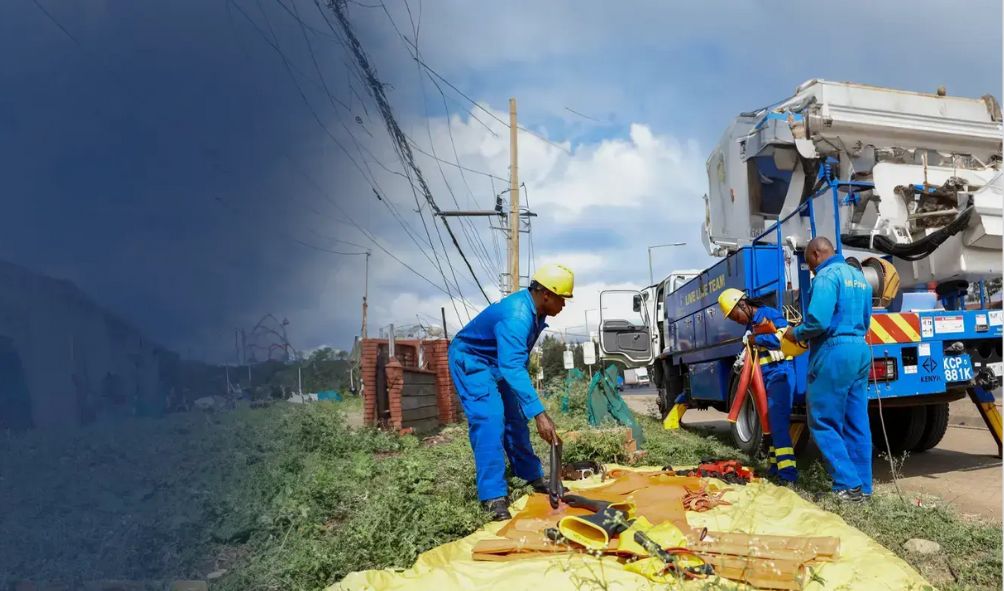
EXPLAINED: Why 9-Hour Power Blackout On Kenyans Are Biting EPRA Back
According to a survey by the Energy and Petroleum Regulatory Authority (EPRA), Kenyans experience nine hours of power interruptions per month on average.
According to the bi-annual statistics report for the fiscal year 2024/2025, between July and December 2024, electricity consumers had power outages lasting more than nine hours on average per month.
This startling conclusion, as measured by the System Average Interruption Duration Index (SAIDI), reveals a significant deterioration in the uniformity of electricity delivery across the country.
SAIDI, a major metric of energy reliability, totals the length of all power outages suffered by the average consumer during a given period.
This result is an increase over the 8.84 hours recorded during the same period in the previous fiscal year.
Today, we have released the Energy and Petroleum Statistics Report as of December 2024, providing key insights into Kenya’s evolving energy landscape. The report highlights a 6.13% increase in electricity generation, with peak demand reaching 2,288.35 MW, reflecting the country’s… pic.twitter.com/LHzaqYjZfm
— Energy and Petroleum Regulatory Authority (@EPRA_Ke) March 27, 2025
Alarmingly, it substantially surpasses the Authority’s target of 3.25 hours for the current tariff control period.
The annoyance and economic costs of these extended periods without energy are obvious for households, companies, and public agencies alike.
The reporting period coincides with a number of widespread power outages experienced by Kenyans in 2024.
That’s not all; EPRA discovered that Kenya Power, the national utility company, takes approximately three hours to resolve any reported power outage.
According to the report, the Customer Average Interruption Duration Index (CAIDI), which evaluates the average time it takes to restore service to consumers during an outage, rose to 2.56 hours, exceeding EPRA’s target of 2.45 hours.
ALSO READ:
- Kenya’s David Munyua Heads Back To PDC World Darts Championship
- A Man Dies In Police Custody, Family Says Victim Had Mental Illness
- DP Kindiki Makes A Ksh39 Billion Projects’ Pledge To Meru, Slams Local Leaders
- FKF Issues Way Forward On Kenya Premier League’s New Season
- Court Rules On 8 Utumishi Girls Fire Suspects, Explains Reasons Behind
Another concern raised by the EPRA report is the significant quantity of electricity lost within the power system, known as system losses.
These losses include both technical inefficiencies in transmission and distribution, as well as commercial losses caused by issues like illegal connections and meter tampering.
The investigation discovered that “24.2 percent of the total energy purchased by the national utility was lost” throughout the evaluation period.
These high system losses are a cause for concern as they ultimately translate to increased operational costs for the power utility, which can, in turn, exert upward pressure on electricity tariffs borne by Kenyan consumers.
EXPLAINED: Why 9-Hour Power Blackout On Kenyans Are Biting EPRA Back