EXPLAINER: Why Kenya Will Borrow More Despite High Tax Laws
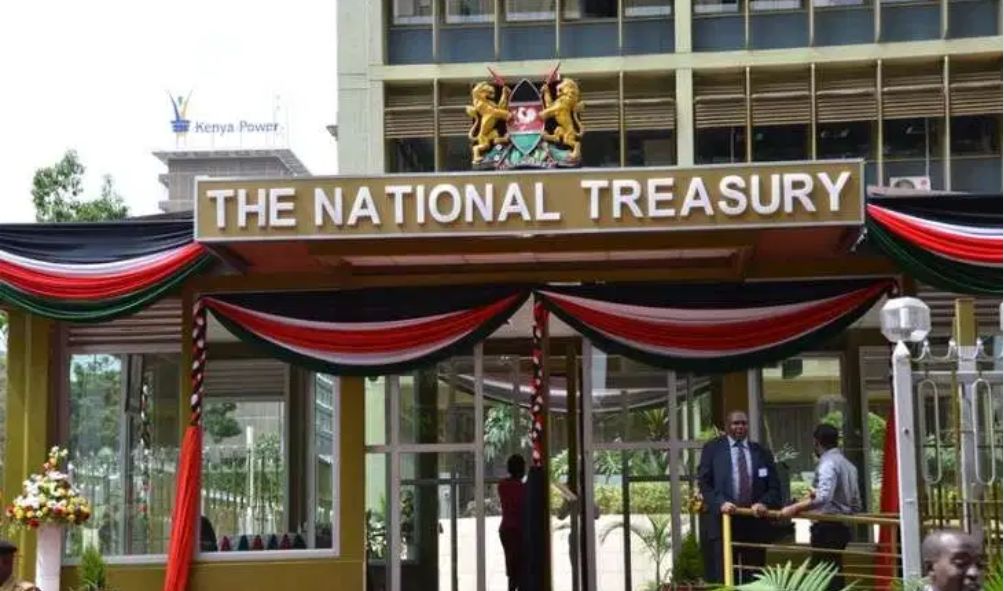
Treasury Cabinet Secretary John Mbadi has indicated that the government intends to increase borrowing and reduce revenue collection this fiscal year.
The Treasury revealed in a gazette notice that Kenya is now targeting Ksh2.4 trillion ($18.5 billion) in revenue for the fiscal year ending in June, 3% lower than the amended target of Ksh2.475 trillion.
The decision was largely influenced by fatal Gen Z-led protests over the 2024 Finance Bill, which prompted President William Ruto to abandon unpopular tax ideas on everything from wheat to diapers.
“This economy was shut for two months. That affected revenue collection,” Mbadi explained to lawmakers in a past engagement this week.
The Cabinet Secretary for National Treasury John Mbadi has assured the @SenCommitteeKE on Finance and Budget that his Ministry is finalizing the roll out of the Integrated County Revenue Collection and Management System to ensure uniformity of the country's financial systems. pic.twitter.com/f6vCSV946Y
— Senate of Kenya (@Senate_KE) March 18, 2025
The anti-Finance Bill riots, which transformed into anti-Ruto protests, reportedly resulted in at least 60 casualties and many more abductions.
Mbadi’s expectation for net domestic borrowing increased by 46% to Ksh597.2 billion, according to the notification.
Foreign loans are now expected to total Ksh718.4 billion, up roughly one-fifth (Ksh598.6 billion) from the previous revised estimate.
However, the changes put Kenya in a precarious position, since the International Monetary Fund (IMF) recently reported that the country was at high risk of debt distress.
Debt distress occurs when a country (or occasionally a corporation or individual) is struggling or unable to satisfy its debt obligations.
The country withdrew from the final evaluation of a four-year $3.6 billion (Ksh 466.1 billion) IMF program that expired this month, skipping approximately $850 million (Ksh 110 billion) in financing in favor of applying for a new one.
Prime Cabinet Secretary Musalia Mudavadi supported the action, stating that a new arrangement will give Ruto’s administration the freedom to determine its own agenda and goals.
“Some of the targets were extremely steep,” Mudavadi noted of the last programme.
“If you are unrealistic with some of your projections, you end up exerting a lot of pressure on your economy and your people,” he explained.
Engaged in a key briefing on the financing terms for the multibillion-shilling Nairobi Central Station, the heart of the transformative Nairobi Railway City, between the National Treasury and UK Export Finance (UKEF).
— Musalia W Mudavadi (@MusaliaMudavadi) April 14, 2025
This milestone follows the joint commitment made by H.E.… pic.twitter.com/EK1ieuIaGi
The PCS also stated that negotiations for a new three-year contract would begin soon and be completed by November, but did not give any information.
He did, however, state that the agreement will take into account present conditions as well as the local and global economic climates.
ALSO READ:
- Kenya’s David Munyua Heads Back To PDC World Darts Championship
- A Man Dies In Police Custody, Family Says Victim Had Mental Illness
- DP Kindiki Makes A Ksh39 Billion Projects’ Pledge To Meru, Slams Local Leaders
- FKF Issues Way Forward On Kenya Premier League’s New Season
- Court Rules On 8 Utumishi Girls Fire Suspects, Explains Reasons Behind
“We have to come to terms and discuss these new realities as we negotiate the new programme,” Mudavadi said.
“We would have to be very realistic based on the numbers that we have as a country to be able to project and show the kind of revenue targets that we want to work with going forward.”
It remains to be seen how these fiscal policies would align the government’s development agenda with other external factors.
Consequently, geopolitical tensions occasioned by United States President Donald Trump’s imposition of trade tariffs still linger.
EXPLAINER: Why Kenya Will Borrow More Despite High Tax Laws